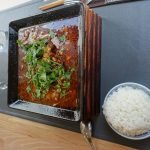
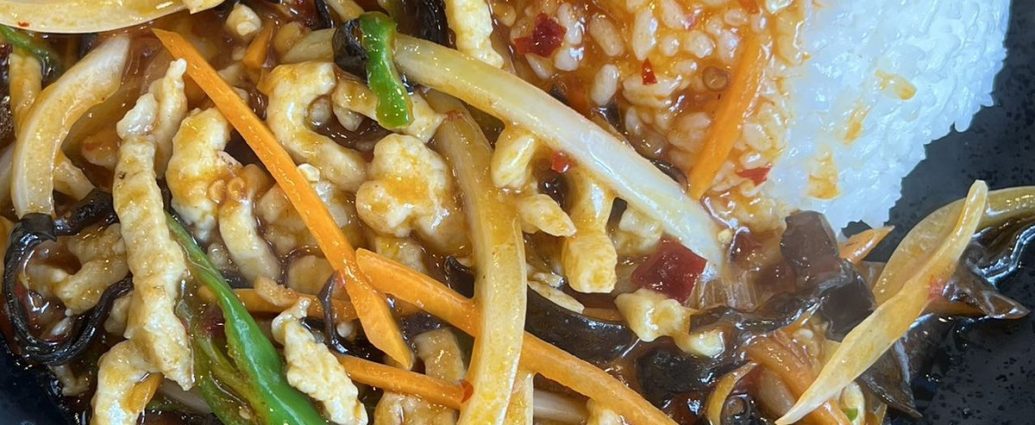
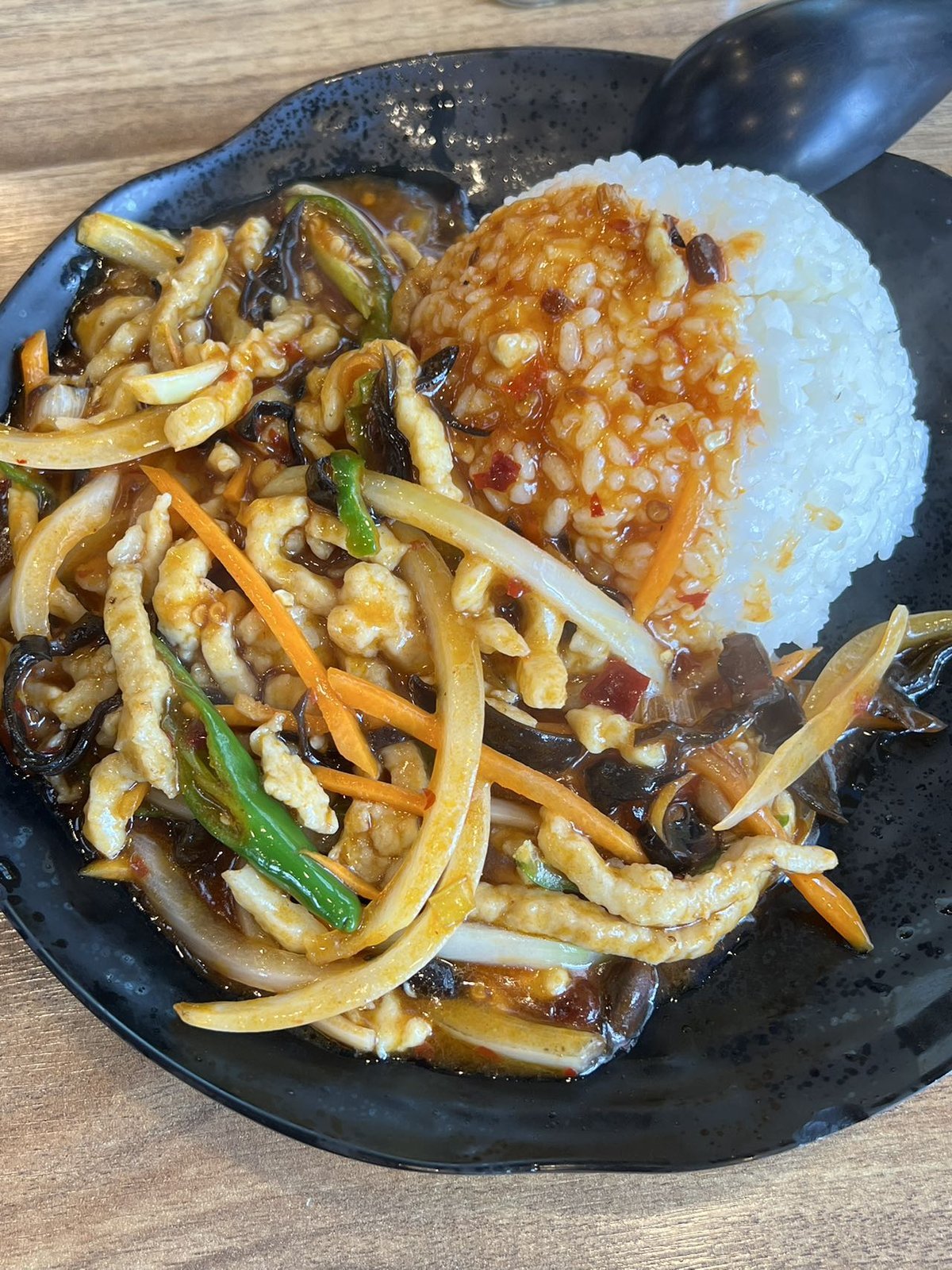
Yu Xiang Rou Si (鱼香肉丝), or Fish-Fragrant Shredded Pork, is one of Sichuan cuisine’s most iconic dishes — despite its name, there is no fish in it. The “fish-fragrant” (yuxiang) refers to a classic flavor profile of pickled chilies, ginger, garlic, and scallions that was traditionally used in fish cookery. Tender strips of pork are wok-tossed in a glossy, tangy-spicy sauce that is simultaneously savory, sour, sweet, and aromatic.
鱼香 is one of the canonical flavor profiles of Sichuan cooking, and its origin is practical. Freshwater fish in Sichuan can taste muddy, so cooks developed a seasoning — pickled chilies (泡椒), ginger, garlic, scallion, sugar, and vinegar — that masked the muddiness and made the fish delicious. The combination worked so well that it was applied to pork, eggplant, and tofu, and 鱼香 became a flavor family in its own right, entirely without fish. Sichuan cooks describe the target as 咸甜酸辣兼备 — salty, sweet, sour, and spicy at once, with the aromatics running through. 鱼香肉丝 is the dish where that balance is most clearly on display.
This recipe comes from a Chengdu chef who taught me that the secret to authentic yuxiang lies in the pickled chili paste — soak dried chilies in warm water, then pound them with ginger and garlic into a fragrant paste that forms the soul of the dish.
The 鱼香 Balance
Four elements, held in tension, and the classic ratio is worth learning:
- 咸 (salty) — light soy sauce and the salt in the pickled chilies
- 甜 (sweet) — sugar, which rounds the vinegar and gives the sauce its gloss
- 酸 (sour) — Chinkiang vinegar, added at the end so it stays bright
- 辣 (spicy) — pickled chilies or doubanjiang, for a fermented, aromatic heat
Garlic, ginger, and scallion provide the aromatic spine, and a cornstarch slurry gives the sauce its clinging body. Sichuan cooks describe the ideal as 荔枝味 — “lychee flavor” — because the sweet-sour balance should be bright and fruity rather than heavy.
Velveting and Shredding
- Cut the pork into thin, even matchsticks — about 3mm; even sizing means even cooking in a 90-second stir-fry
- Slice against the grain — this shortens the muscle fibers and makes the pork tender
- Velvet with cornstarch, egg white, and a little water — the coating protects the pork from the wok’s heat
- Marinate 15–20 minutes — long enough for the coating to hydrate and bind
- Wood ear and bamboo shoots — the traditional vegetables; both shredded to match the pork
- Have everything ready before you heat the wok — the cooking takes under three minutes
Ingredients and Where to Find Them
- Pork loin or tenderloin — pork loin, cut into thin matchsticks
- Pickled chilies or doubanjiang — Pixian doubanjiang as the accessible substitute for 泡椒
- Chinkiang black vinegar — Chinkiang vinegar for the sour element
Also needed: wood ear mushrooms, bamboo shoots, garlic, ginger, scallions, sugar, light soy sauce, Shaoxing wine, cornstarch, and a high-smoke-point oil.
How to Cook It
- Slice 300g (10.5 oz) pork into 3mm matchsticks and marinate 20 minutes with 1 egg white, 2 teaspoons cornstarch, 1 tablespoon Shaoxing wine, and 1 teaspoon light soy
- Soak 15g wood ear in warm water for 30 minutes; shred it and 60g bamboo shoots to match the pork
- Mix the sauce: 2 tablespoons light soy, 2 tablespoons Chinkiang vinegar, 1.5 tablespoons sugar, 1 teaspoon Shaoxing wine, 1 teaspoon cornstarch, and 4 tablespoons water
- Heat a wok over high heat with 3 tablespoons oil and stir-fry the pork for 90 seconds until just cooked; remove
- Add 1 tablespoon oil and 1.5 tablespoons doubanjiang; fry 30 seconds until the oil turns red
- Add 4 minced garlic cloves, 1 tablespoon minced ginger, and scallion whites; stir 20 seconds, then add the wood ear and bamboo shoots for 1 minute
- Return the pork, pour in the sauce, and toss over high heat 30 seconds until glossy; add scallion greens and serve with rice
Variations
- With eggplant — the same sauce applied to eggplant; see my Yu Xiang Eggplant 鱼香茄子
- With chicken — chicken thigh cut into matchsticks works identically and is slightly leaner
- With tofu — firm tofu strips, pan-fried first, make an excellent vegetarian version
- Extra spicy — add 1 teaspoon chili flakes with the doubanjiang or finish with chili oil
Frequently Asked Questions
Why is it called “fish-fragrant” if there is no fish?
The name refers to a Sichuan seasoning combination traditionally used to prepare freshwater fish — pickled chilies, ginger, garlic, scallion, sugar, and vinegar. The flavor was so popular that cooks applied it to pork and other ingredients, and 鱼香 became a standalone profile. There is no fish in the dish.
How do I keep the pork tender?
Velvet it with cornstarch and egg white, and cook it fast over high heat. The coating seals in moisture, and the pork is removed from the wok after 90 seconds so it never overcooks. Slice against the grain for maximum tenderness.
What is 泡椒 and can I substitute it?
泡椒 are pickled red chilies — fermented in brine, giving them a tangy, aromatic heat. Doubanjiang is the most accessible substitute and works well, though it is saltier and less tangy. If you can find jarred 泡椒, it makes a noticeable difference.
Can I make the sauce ahead?
Yes — mix the sauce and refrigerate it for up to three days. Stir it again before use, since the cornstarch settles. The pork can also be sliced and marinated a day ahead, which makes this a genuinely fast weeknight dinner.
More Sichuan Classics
Love Sichuan food? Try my Yu Xiang Eggplant 鱼香茄子, the iconic Mapo Tofu 麻婆豆腐, or the twice-cooked Hui Guo Rou 回锅肉.
As an Amazon Associate, I earn from qualifying purchases. These are affiliate links at no extra cost to you.