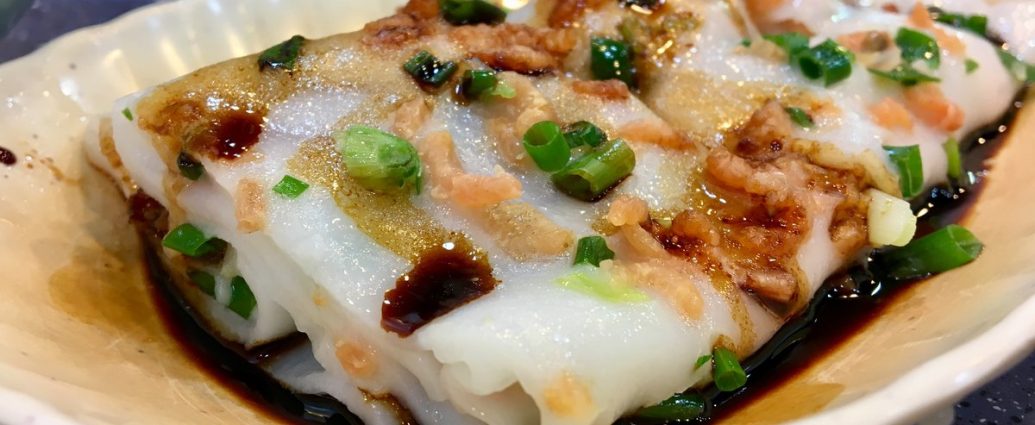
Cheung Fun (肠粉), also known as Rice Noodle Rolls, is one of the most comforting dishes on the dim sum cart — silky, steamed rice noodle sheets rolled around shrimp or beef, then drizzled with sweet soy sauce. The noodles are impossibly smooth and tender, gliding across the plate with every bite. Here is how to make authentic cheung fun at home.
Cheung fun is a Cantonese dim sum dish of thin steamed rice noodle sheets rolled into logs, typically filled with shrimp, beef, or dried scallion and served with a sweet soy-based sauce. It is made from rice flour and wheat starch steamed in a flat tray.
肠粉 is a Cantonese breakfast staple as much as a dim sum item — in Guangzhou, 肠粉 shops open before dawn and sell rolls to office workers and schoolchildren on their way to work. The name means “intestine noodle,” a description of the rolled shape rather than the contents. Two techniques dominate: 布拉肠 (cloth-drawn), where the batter is spread on a taut cloth over the steamer and peeled off with a scraper, producing the most delicate texture; and 抽屉肠粉 (drawer-style), where the batter is poured into sliding metal trays. The cloth method is the traditional Guangzhou style and the one that produces the silkiest sheets, but the drawer method is far easier at home.
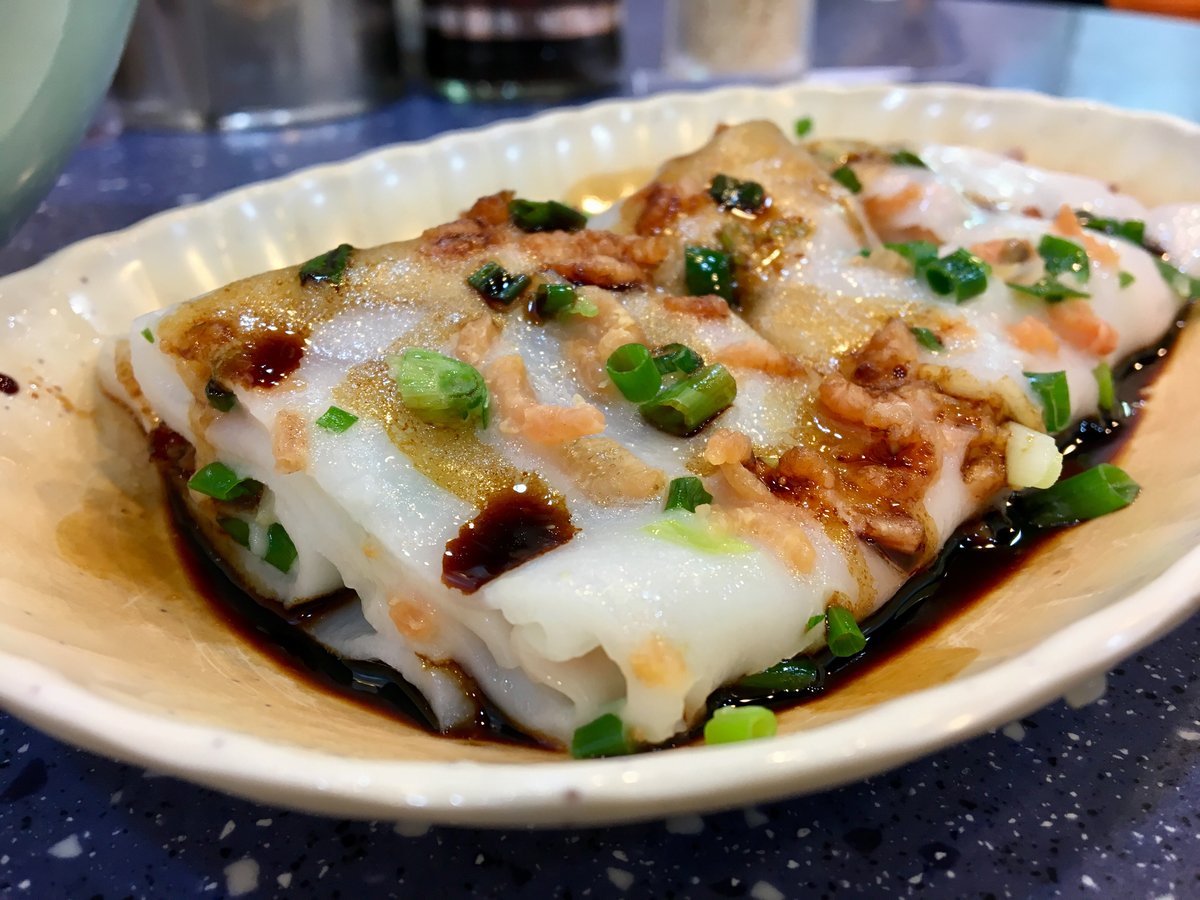
This recipe comes from a dim sum chef in Guangzhou who taught me the essential trick: the rice batter must be poured THIN — barely covering the bottom of the steaming tray — and steamed for only 2-3 minutes. Too thick, and the rolls turn chewy; too long, and they dry out. The result should be translucent, silky, and almost melt-in-the-mouth.
Thin Pour, Short Steam
Everything about the texture depends on two variables. The pour: the batter should barely coat the tray, about 2mm deep — thick enough to lift in one piece, thin enough to be translucent. The time: two to three minutes over rapidly boiling water, until the sheet turns opaque white and begins to bubble slightly. Beyond that, the sheet dries at the edges and turns leathery, and it will crack when you try to roll it. The other essential detail is the tray: it must be flat, wide, and lightly oiled before every single pour.
The Batter Ratio
- Rice flour is the base — it provides the flavor and the characteristic softness
- Wheat starch adds translucence — a small proportion gives the sheet its glassy look and silky glide
- A little cornstarch improves pliability — it keeps the sheet from tearing when rolled
- Water at roughly 2.5 times the flour weight — the batter should be thin, like single cream
- Rest the batter 30 minutes — the flours hydrate and the sheets steam more evenly
- Stir before every pour — the starch settles quickly, so the batter must be remixed each time
Ingredients and Where to Find Them
- Rice flour — rice flour, the base of the batter
- Wheat starch (澄面) — wheat starch for translucence
- Seasoned soy sauce — sweetened soy sauce for the classic dressing
Also needed: raw shrimp or ground beef, dried scallion, eggs (optional), ginger, scallions, light soy sauce, sugar, sesame oil, and oil for brushing the trays.
How to Make It
- Mix 150g rice flour, 30g wheat starch, 20g cornstarch, and 1/2 teaspoon salt with 500ml water; rest 30 minutes
- Make the sauce: simmer 3 tablespoons light soy, 1 tablespoon dark soy, 1 tablespoon sugar, 2 tablespoons water, and a few drops of sesame oil for 2 minutes
- Marinate 200g (7 oz) shrimp with a pinch of salt, white pepper, and 1 teaspoon cornstarch
- Heat a wide flat tray over boiling water and brush it lightly with oil
- Ladle in just enough batter to coat the tray thinly (about 2mm); scatter shrimp over one side
- Steam 2–3 minutes until the sheet is opaque and slightly bubbled; lift it out and roll it up with a scraper
- Repeat, brushing the tray with oil each time; cut the rolls into sections, drizzle with the soy sauce, and serve immediately
Variations
- With beef (牛肉肠粉) — thinly sliced marinated beef in place of shrimp
- With 炸两 (fried dough) — a strip of youtiao rolled inside for crunch; a Hong Kong favorite
- With dried scallion and egg (葱花鸡蛋肠) — the simplest and cheapest version, and a Guangzhou breakfast standard
- With char siu — diced barbecue pork rolled in, served with the same sweet soy
Frequently Asked Questions
Why did my cheung fun turn out thick and chewy?
Too much batter in the tray. The sheet should be about 2mm thick — just enough to lift in one piece. Pour a thin layer and tilt the tray to spread it, rather than adding more batter to cover the surface.
Why did my rolls crack or tear?
The sheet was over-steamed or the tray was not oiled. Two to three minutes is enough; beyond that the edges dry and become brittle. Brush the tray with oil before every pour, and lift the sheet with a scraper or thin spatula rather than your fingers.
Do I need a special steamer?
No — a bamboo steamer or a flat metal tray placed over boiling water in a wok works perfectly. The key is a flat, wide steaming surface.
What is the sauce made of?
A sweetened soy sauce, made by simmering light and dark soy with sugar, water, and a little sesame oil. It is deliberately sweeter and thinner than regular soy sauce so it coats the delicate noodles without overpowering them.
More Dim Sum Classics
Build a dim sum table with my Har Gow 虾饺, the open-topped Shu Mai 烧卖, or the lotus-leaf parcel Lo Mai Gai 糯米鸡.
As an Amazon Associate, I earn from qualifying purchases. These are affiliate links at no extra cost to you.