
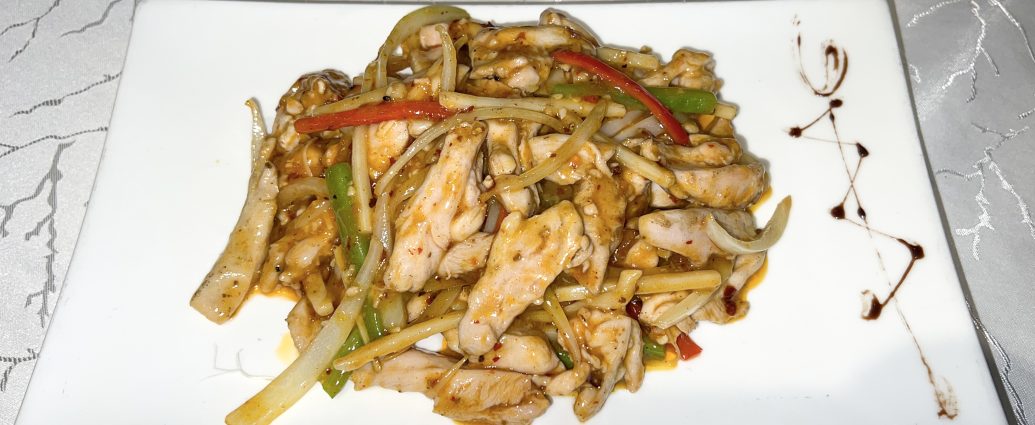
Dong’an Chicken (东安子鸡) is one of Hunan cuisine’s most famous dishes — tender chicken stir-fried with fresh chilies, ginger, and a generous splash of vinegar, creating a hot-and-sour flavor that is unmistakably Hunan. It originated in Dong’an County, Hunan, and has been a regional treasure for centuries. Here is the authentic recipe.
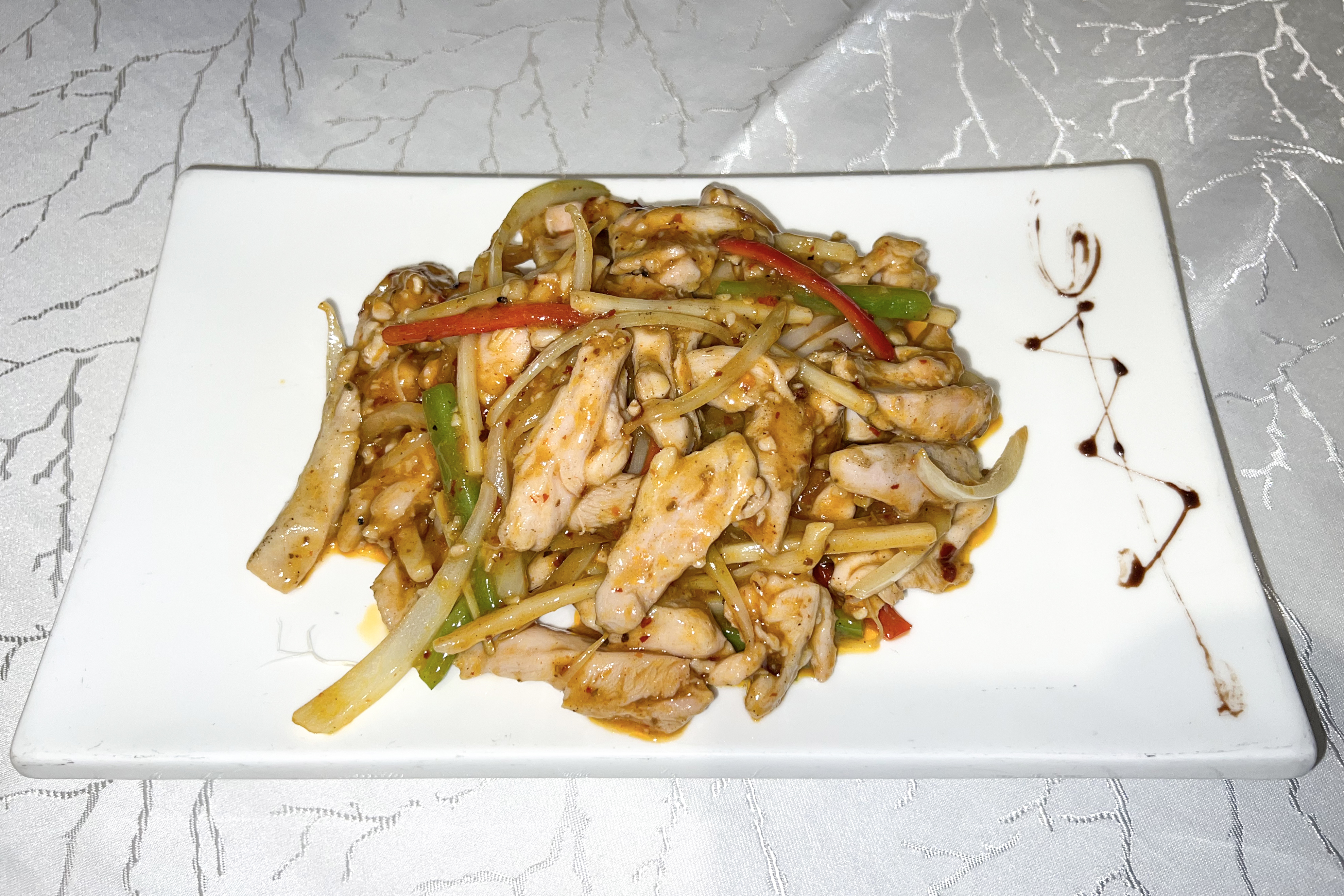
Dong’an chicken (东安子鸡) is a famous Hunan dish of poached chicken stir-fried with fresh chilies, ginger, and vinegar. It is known for its hot-and-sour balance, glossy sauce, and tender meat with the skin still intact.
东安子鸡 is often described as one of Hunan’s signature dishes, and its legend reaches back centuries — one popular account traces it to a roadside inn in Dong’an County, where a cook improvised a dish of chicken, vinegar, and chilies for travelers. Whatever its exact origin, the dish became famous enough to be served at state banquets, and it remains a benchmark of 湘菜 (Hunan cuisine) precisely because it is so restrained by Hunan standards. There is no mountain of chilies here; the heat is measured, and the vinegar is the star. The combination of 酸 (sour) and 辣 (spicy) in balance, with the chicken skin left on for richness, is what makes it unmistakable.
This recipe comes from a chef in Yongzhou, Hunan, who taught me the essential two-step method: the chicken is first POACHED until just cooked, then stir-fried quickly with the aromatics and vinegar. The poaching keeps the meat juicy; the fast wok finish adds the fire.
Why Poach First, Then Stir-Fry
Most Hunan chicken dishes are stir-fried raw. 东安子鸡 is different, and that difference is the whole technique. Poaching the chicken first — gently, in aromatic water, just until cooked — keeps the meat uniformly juicy and lets the cook control doneness precisely. The wok then does what a wok does best: it adds color, aroma, and the glossy vinegar glaze in about two minutes. Skip the poach and you get dry, uneven chicken and a dish that tastes of vinegar rather than chicken. Do it and you get the texture this dish is famous for: tender meat, intact skin, and a sauce that clings.
The Hunan Hot-and-Sour Balance
Hunan cooking is often reduced to pure fire, but the region’s best dishes are exercises in balance. 东安子鸡 layers four things:
- 酸 (sour) — good vinegar, added in two stages: some with the aromatics to cook in, and a splash at the end for brightness
- 辣 (spicy) — fresh green and red chilies for a clean, vegetal heat rather than dried-chili smoke
- 姜 (ginger) — generous slivers that warm the dish without sharpness
- 鲜 (freshness) — the poaching liquid, reduced into the sauce, returns the chicken’s own flavor to the dish
Ingredients and Where to Find Them
- Whole chicken or bone-in legs — bone-in chicken; skin-on is essential for the traditional texture
- Chinkiang black vinegar — Chinkiang vinegar, a fine substitute for Hunan rice vinegar
- Fresh chilies — fresh green and red chilies for color and clean heat
Also needed: ginger, garlic, scallions, Shaoxing wine, light soy sauce, salt, sugar, cornstarch, and sesame oil. A few Sichuan peppercorns are optional and not traditional.
How to Make It
- Poach 1kg (2.2 lb) chicken in water with ginger, scallions, 1 tablespoon Shaoxing wine, and 1 teaspoon salt at a bare simmer for 20–25 minutes until just cooked
- Reserve 200ml of the poaching liquid; cool the chicken, then chop into bite-sized pieces with the skin on
- Slice 5 fresh green chilies and 3 red chilies diagonally; cut 30g ginger into thin slivers; mince 4 garlic cloves
- Mix the sauce: 3 tablespoons vinegar, 1 tablespoon light soy, 1 teaspoon sugar, 1 teaspoon cornstarch, and 100ml poaching liquid
- Heat a wok until smoking, add oil, and stir-fry the ginger, garlic, and chilies for 30 seconds until fragrant
- Add the chicken and toss over high heat for 2 minutes, then pour in the sauce and cook 1 minute until glossy
- Add a final splash of vinegar and a few drops of sesame oil, toss once, and serve with steamed rice
Variations
- With more heat — add 6 snipped dried chilies with the aromatics for a smokier, fierier version
- With pickled chilies — a spoonful of 剁椒 or pickled chilies adds fermented depth
- Whole-chicken banquet version — the traditional presentation keeps the chicken on the bone, chopped into neat pieces and arranged back into shape
- With duck or pork — the same hot-and-sour treatment works on duck; see my Yongzhou Blood Duck 永州血鸭
Frequently Asked Questions
What does 东安子鸡 taste like?
It is hot and sour in balance rather than purely spicy: tender chicken with the skin on, a clean vinegar tang, warming ginger, and fresh chili heat that builds gently. Compared with other Hunan dishes, it is more restrained and more aromatic.
Can I use chicken breast?
You can, but the dish loses much of its character — the skin and the mix of light and dark meat are part of the traditional texture. If you use breast, poach it for only 12 minutes and slice it rather than chopping it.
What vinegar is traditional?
Hunan cooks use local rice vinegar; Chinkiang black vinegar is an excellent substitute with a similar mellow sourness. Do not use white vinegar — it is too sharp.
Can I make it ahead?
The chicken can be poached up to a day ahead and refrigerated in its liquid. The stir-fry itself should be done at the last minute so the vinegar stays bright and the chicken stays juicy.
More Hunan Classics
Explore Hunan flavor with my Xiao Chao Rou 小炒肉, the ginger-forward Hunan Ginger Chicken 生姜炒鸡, or the fiery Steamed Fish Head with Chopped Chili 剁椒鱼头.
As an Amazon Associate, I earn from qualifying purchases. These are affiliate links at no extra cost to you.

1 Comment