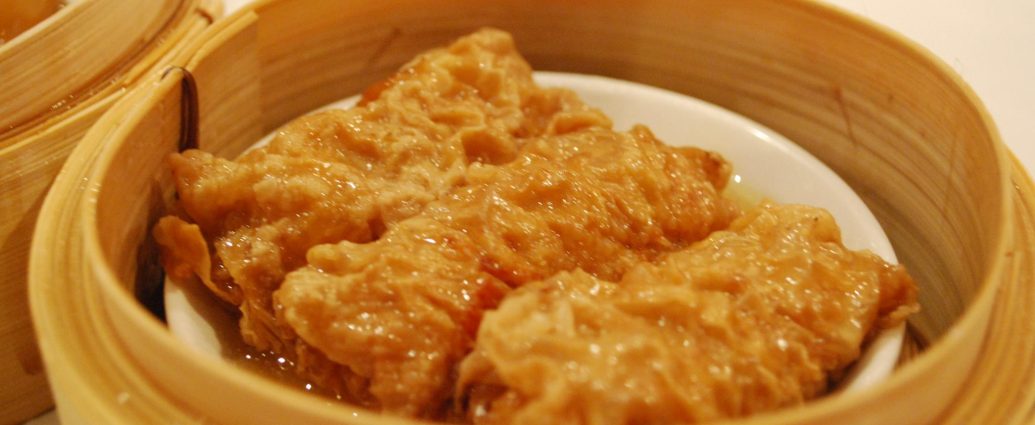
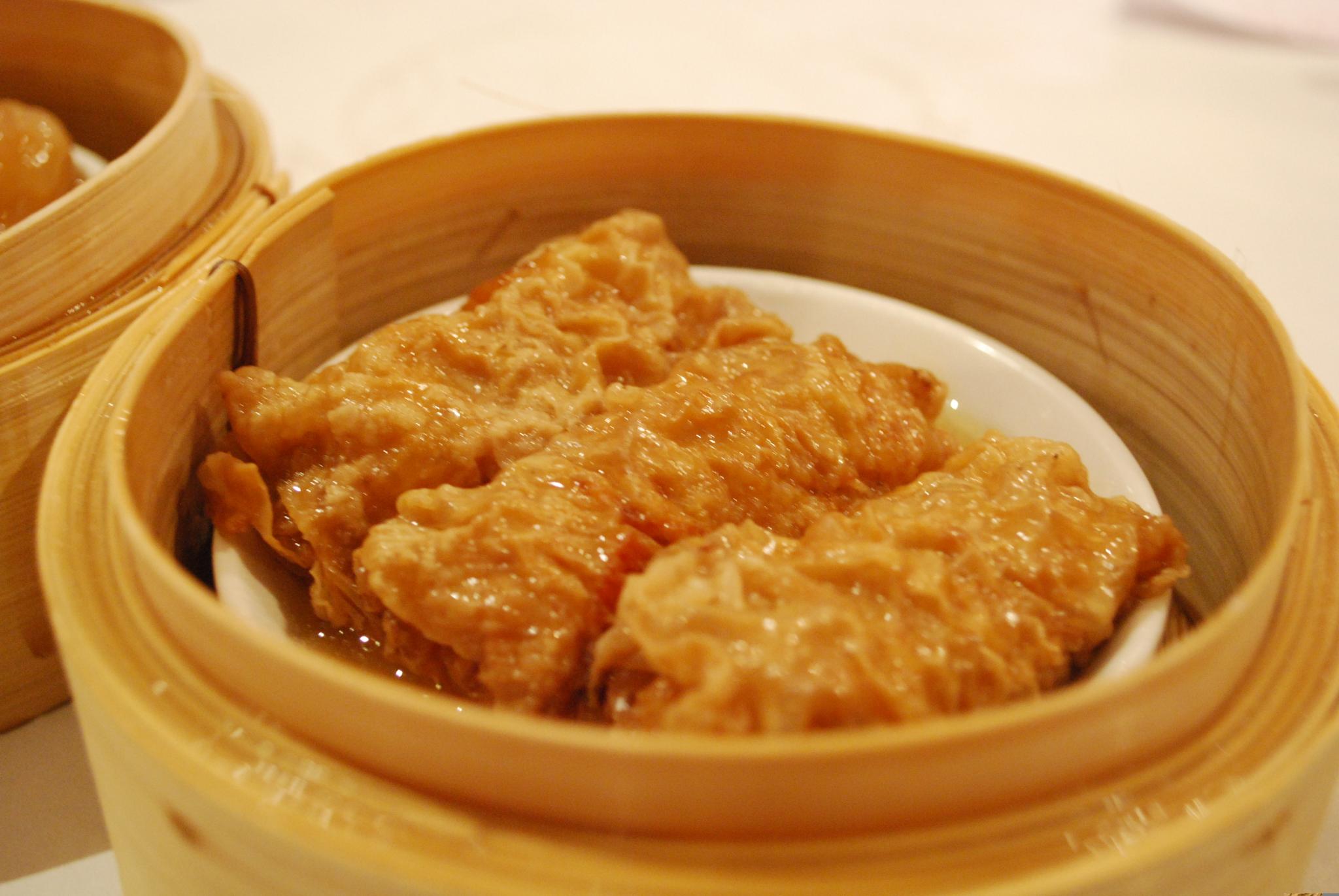
Steamed Beancurd Rolls (鲜腐竹卷) are a delicate dim sum favorite — thin sheets of tofu skin wrapped around a juicy filling of shrimp, pork, and water chestnuts, then steamed until translucent and tender. The beancurd skin soaks up the filling’s juices, creating a silky, savory bite. Here is the classic recipe.
Steamed beancurd rolls (鲜腐竹卷) are a dim sum dish of tofu skin sheets wrapped around a shrimp and pork filling, then steamed until tender. The thin beancurd skin becomes silky and absorbs the savory juices of the filling.
鲜腐竹卷 belongs to the Cantonese tradition of 腐皮 (fǔ pí) cookery — dishes built on the thin skin that forms on the surface of simmering soy milk. That skin is one of the most versatile ingredients in the Cantonese kitchen: deep-fried it becomes crisp and shatters; braised it turns rich and yielding; steamed, as here, it stays delicate and silky, taking on whatever it wraps. Dim sum kitchens pair it with a light shrimp-and-pork filling precisely because the skin is so good at holding juices — every bite releases a little savory broth.
This recipe comes from a dim sum chef in Guangzhou who taught me the essential trick: soak the dried beancurd skin until JUST pliable — not too soft, or it tears when rolling. The filling must be firm enough to hold its shape but juicy enough to moisten the skin.
The Soak-and-Roll Balance
Beancurd skin is unforgiving in both directions. Soak it too briefly and it cracks as you fold; soak it too long and it turns to paste and disintegrates in the steamer. The target is a sheet that is fully pliable but still has body — usually 2–3 minutes in warm (not hot) water, or 20 minutes in cold. Work with one sheet at a time, keep the rest covered with a damp towel, and roll firmly but without stretching. A cornstarch slurry brushed on the seam seals the roll and keeps the filling from leaking out during steaming.
Building the Filling
- Shrimp — roughly chopped, not minced; distinct pieces give the filling its bouncy texture
- Pork — a fatty cut (shoulder or belly) keeps the filling juicy; lean pork dries out when steamed
- Water chestnuts — diced fine for a clean crunch; jicama works as a substitute
- Seasoning — light soy, oyster sauce, sesame oil, white pepper, sugar, and a little cornstarch to bind
- Rest the filling — 20 minutes in the fridge lets it firm up and makes rolling far easier
Ingredients and Where to Find Them
- Dried beancurd skin (腐皮) — dried tofu skin sheets; look for thin, pale sheets labeled 腐皮 or yuba
- Water chestnuts — water chestnuts, canned is perfectly fine
- Oyster sauce — premium oyster sauce for the filling’s savory backbone
Also needed: shrimp, ground pork, garlic, ginger, light soy sauce, Shaoxing wine, sesame oil, cornstarch, and sugar. Fresh (not dried) beancurd skin can be used if you can find it — it needs no soaking at all.
How to Make Them
- Chop 200g (7 oz) shrimp coarsely and combine with 150g (5 oz) ground pork
- Add 1 tablespoon light soy, 1 tablespoon oyster sauce, 1 teaspoon Shaoxing wine, 1 teaspoon sesame oil, 1/2 teaspoon sugar, white pepper, 2 minced garlic cloves, and 1 tablespoon cornstarch
- Fold in 4 diced water chestnuts; refrigerate 20 minutes
- Soak the beancurd sheets in warm water 2–3 minutes until pliable; pat dry and cut into 12cm (5 in) squares
- Place 2 teaspoons of filling near one edge, fold in the sides, and roll firmly; seal the seam with cornstarch slurry
- Arrange seam-side down in a lined steamer and steam over rapidly boiling water for 10–12 minutes
- Drizzle with a little seasoned soy sauce and sesame oil, scatter with scallions, and serve hot
Variations
- Crispy fried version — steam first, then deep-fry at 180°C (355°F) for 2 minutes for a shattering crust; this is the 炸腐皮卷 served at banquets
- Mushroom version — swap the shrimp and pork for shiitake, wood ear, and shredded carrot for a vegetarian roll
- With bamboo shoots — diced bamboo adds another layer of crunch and is traditional in Guangzhou
- Braised version — after steaming, simmer the rolls in a light oyster-sauce gravy for 10 minutes and serve with the sauce spooned over
Frequently Asked Questions
Why did my beancurd skin tear?
It was soaked too long or the water was too hot. Soak until just pliable — 2–3 minutes in warm water — and handle it gently with wet hands. If a sheet does tear, overlap the torn edges and roll over them; the cornstarch seal will hold.
What is beancurd skin?
Beancurd skin (腐皮 or 腐竹, yuba) is the thin film that forms on the surface of heated soy milk, which is lifted off and dried. It is high in protein, has a mild, slightly nutty flavor, and is used across Chinese cooking — fried, braised, steamed, or added to soups.
How do I store them?
Assembled uncooked rolls keep 24 hours refrigerated, or 2 months frozen. Steam from frozen for 12–14 minutes. Once cooked, they are best eaten the same day; reheat by re-steaming for 5 minutes rather than microwaving, which toughens the skin.
Can I use fresh beancurd skin instead of dried?
Yes, and it is easier — fresh sheets need no soaking and are more pliable. They are sold refrigerated at Chinese grocers, sometimes as “fresh yuba” or 鲜腐皮. Use them within a few days or freeze them.
More Dim Sum to Make at Home
Love steamed dim sum? Try my Har Gow 虾饺, the pork and shrimp Shu Mai 烧卖, or the sticky rice parcel Lo Mai Gai 糯米鸡.
As an Amazon Associate, I earn from qualifying purchases. These are affiliate links at no extra cost to you.