
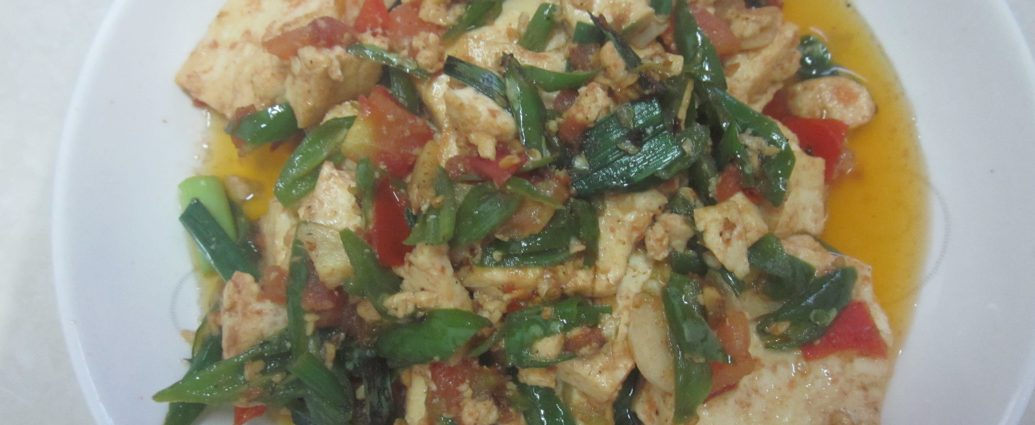
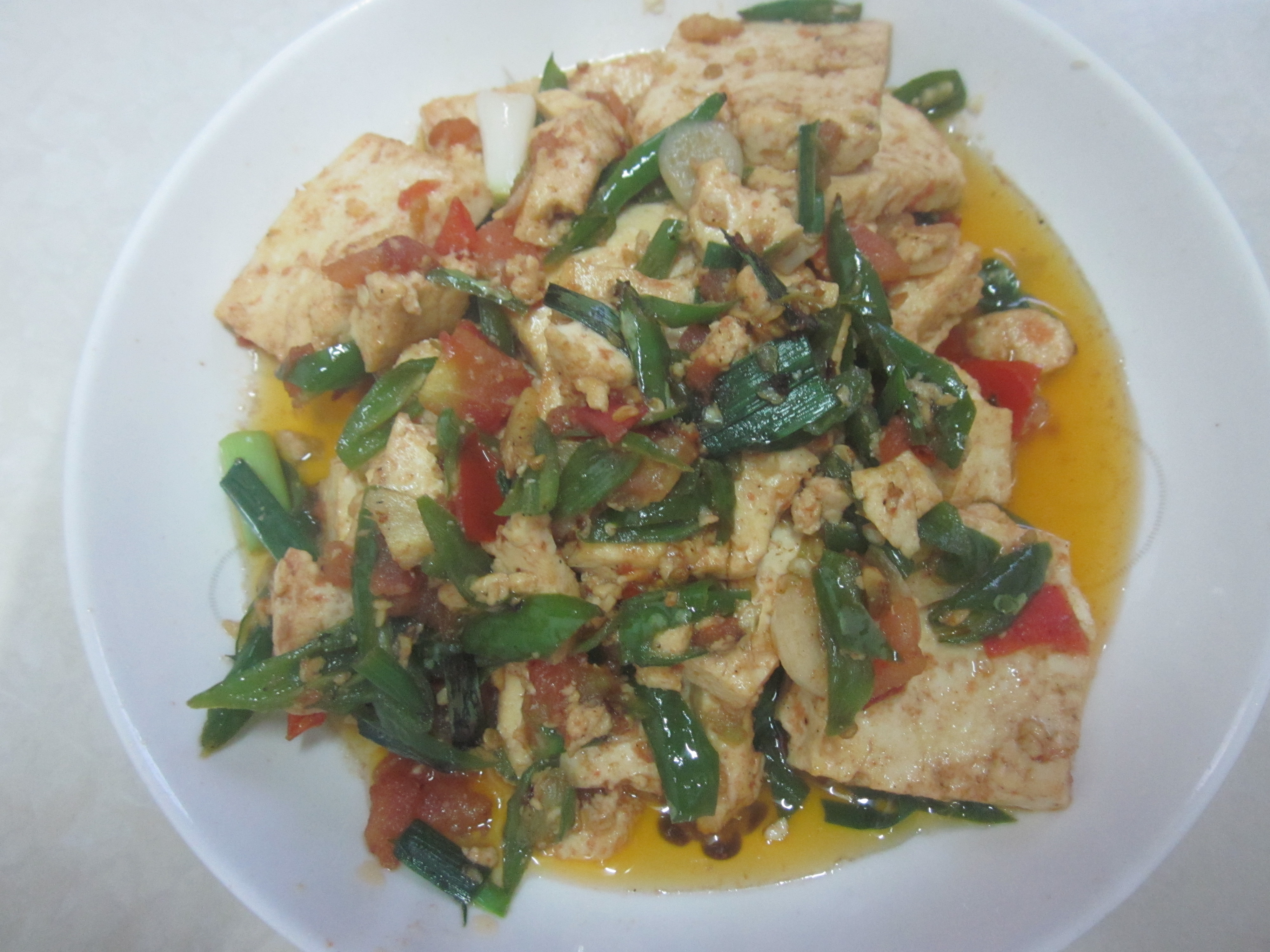
Home-Style Fried Tofu (家常豆腐) is the soul of Hunan home cooking — golden pan-fried tofu slices braised in a rich, spicy sauce with pork, mushrooms, and scallions. Every kitchen has its own version, but the heart is the same: crispy-edged tofu absorbing a savory, slightly fiery sauce until it is absolutely irresistible over rice. Here is the classic Hunan method.
Home-style fried tofu (家常豆腐) is a Chinese home dish of firm tofu slices pan-fried until golden, then braised in a savory spicy sauce with pork, mushrooms, and scallions. It is a staple of Hunan and Sichuan home cooking.
The word 家常 means “home-style” or “everyday,” and it is a promise rather than a description: this is the kind of dish a Hunan family makes on a Tuesday, with whatever is in the fridge. Its close cousin 麻婆豆腐 is a restaurant showpiece built on silken tofu and numbing heat; 家常豆腐 is sturdier, friendlier, and built on firm tofu that has been fried until it can stand up to a braise. That contrast — crisp-edged tofu against a glossy, savory sauce — is the whole appeal, and it is why the dish shows up on Hunan tables far more often than its famous cousin.
This recipe comes from a Hunan home cook who taught me the essential trick: fry the tofu slices in a single layer until deeply golden on BOTH sides before any sauce touches them. The crispy crust is what lets the tofu soak up the sauce without turning mushy.
Fry First, Braise Second
The order of operations is what makes this dish work. Tofu is roughly 85% water, and if you drop it straight into a sauce, it releases that water and turns into a soggy sponge. Pan-frying first does two things: it drives out surface moisture and builds a golden, slightly porous crust. That crust then acts like a sponge of the right kind — it drinks up the braising liquid and holds it, so every slice is seasoned through while still keeping its shape. The rule is simple: no sauce in the pan until the tofu is golden on both sides and has been set aside.
Choosing and Handling the Tofu
- Firm or medium-firm tofu is essential; silken tofu will collapse the moment it meets the pan
- Press for 20 minutes between paper towels under a weighted plate to drive out excess water
- Slice into 1cm (0.4 in) slabs — thick enough to hold together, thin enough to fry through
- Pat dry and dust lightly with cornstarch if you want an even crisper edge
- Fry in a single layer without crowding — a crowded pan steams the tofu instead of browning it
Ingredients and Where to Find Them
- Firm tofu — firm tofu, pressed and sliced
- Doubanjiang — Pixian doubanjiang, the fermented chili-bean paste that gives the sauce its depth
- Light soy sauce — light soy sauce for seasoning without darkening the sauce
Also needed: pork (or skip it for a vegetarian version), fresh shiitake or wood ear mushrooms, garlic, ginger, scallions, stock or water, cornstarch for thickening, sugar, and a little Shaoxing wine.
How to Cook It
- Press 450g (1 lb) firm tofu for 20 minutes, slice into 1cm slabs, and pat dry
- Heat 2 tablespoons oil in a wide pan and fry the tofu in a single layer for 4 minutes per side until deeply golden; remove
- Add 1 tablespoon oil and stir-fry 150g (5 oz) thinly sliced pork until browned
- Add 1 tablespoon doubanjiang, 3 minced garlic cloves, and 1 tablespoon minced ginger; fry 1 minute until fragrant and red
- Add 4 sliced shiitake and stir 1 minute, then pour in 250ml (1 cup) stock with 1 tablespoon light soy and 1 teaspoon sugar
- Return the tofu and simmer 5 minutes, turning the slices once, until the sauce reduces and coats them
- Thicken with a cornstarch slurry, add scallions and a few drops of sesame oil, and serve with steamed rice
Variations
- Vegetarian version — skip the pork and use mushroom stock; add extra shiitake and a handful of wood ear
- With green peppers — a sliced green pepper added with the mushrooms gives a fresh, bitter edge that cuts the richness
- Extra spicy — add 4 snipped dried chilies with the garlic, or a teaspoon of chili oil at the end
- With napa cabbage — a handful of napa added in the last 3 minutes turns it into a fuller one-pan dinner
Frequently Asked Questions
What is doubanjiang?
Doubanjiang is a fermented chili-bean paste from Sichuan — the backbone of many Hunan and Sichuan dishes. It adds a complex, savory, slightly spicy depth that no other ingredient replicates. Pixian doubanjiang, aged for years, is considered the gold standard.
Why did my tofu fall apart?
It was too soft or handled too much. Use firm or medium-firm tofu, press it well, fry it undisturbed until a crust forms on each side, and after adding it back to the sauce, turn the slices gently with a spatula rather than stirring.
Can I skip the frying step?
You can, but the dish will be noticeably softer and the sauce will not cling the same way. If you want to save time, use an air fryer at 200°C (400°F) for 15 minutes instead — it produces a decent crust with far less oil.
Is this dish vegan?
Not as written — it contains pork. To make it vegan, omit the pork, use mushroom or vegetable stock, and check that your doubanjiang contains no animal ingredients (most traditional brands do not).
More Tofu Dishes
Love tofu? Try my Mapo Tofu 麻婆豆腐, the crisp Salt and Pepper Tofu 椒盐豆腐, or the colorful Eight-Treasure Tofu 八宝豆腐.
As an Amazon Associate, I earn from qualifying purchases. These are affiliate links at no extra cost to you.
3 Comments