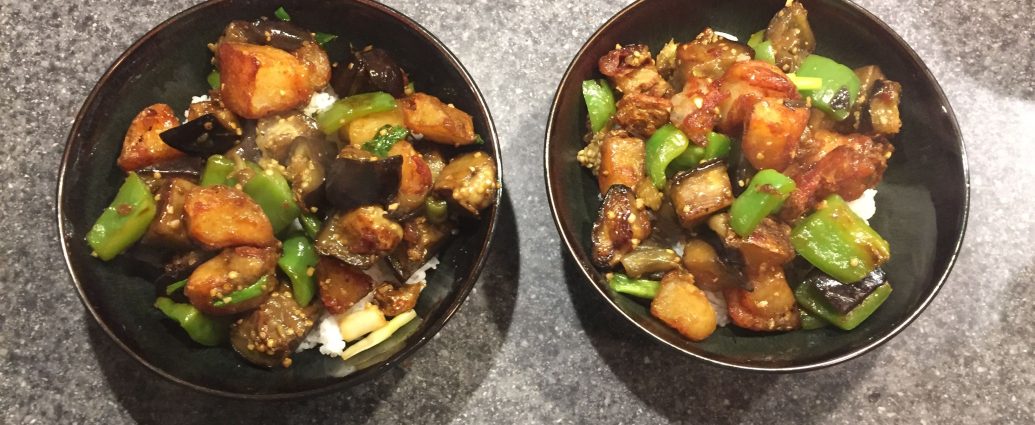
Di San Xian (地三鲜) is the unofficial anthem of the home-style Chinese kitchen — a humble trio of potato, eggplant, and green pepper, each cut into rough chunks, fried until golden, then tossed in a glossy garlicky sauce. The name means “three fresh vegetables of the earth,” and no dish better proves that the humblest ingredients can be spectacular.
The dish hails from Northeast China (Dongbei), where hearty vegetables and bold seasoning reign. Its genius is contrast: crisp-edged potatoes, silky eggplant that soaks up the sauce, and peppers that keep a fresh snap. The restaurant version deep-fries all three; this home recipe uses a generous shallow fry and a clever starchy glaze to get the same gloss with less oil.
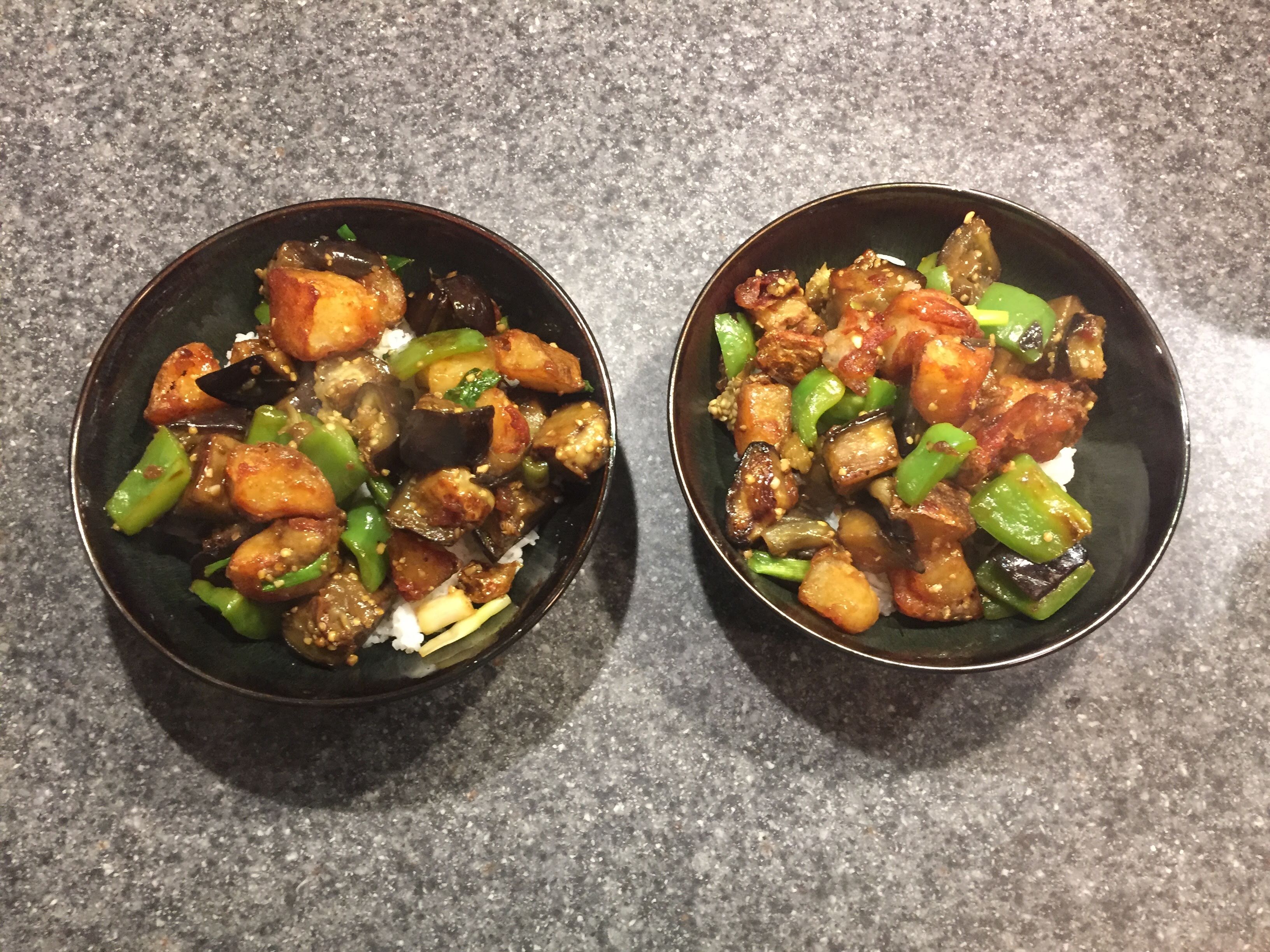
Photo via Wikimedia Commons, CC BY-SA 4.0
地三鲜 belongs to the robust, unfussy cooking of China’s northeast — a region where the growing season is short, the vegetables are hearty, and the seasoning is direct. The name is a small poem: 地 (“earth”), 三 (“three”), 鲜 (“fresh”), the three treasures of the soil. In Dongbei homes it is a staple of the everyday table, served alongside rice and a meat dish. Its appeal is that it makes vegetables feel like a main event — the potato brings substance, the eggplant brings richness, and the pepper brings lift, and the sauce ties all three into something greater than their parts.
The Three Vegetables and Their Timings
Each of the three needs different treatment, and the dish only works if you respect that:
- Potato — needs the longest cooking and the hottest oil to develop a crisp golden crust. Cut into rough chunks and fry first.
- Eggplant — a sponge that will drink oil if you let it. Salt it first to draw out moisture, then fry until the edges soften and color.
- Green pepper — needs only a brief pass. It should keep its snap and its bright color; overcooking turns it limp and dull.
The classic sequence is potato, then eggplant, then pepper, then everything back into the wok together with the sauce for a final thirty seconds.
The Starchy Glaze
The glossy coating that makes restaurant 地三鲜 so appealing comes from a simple trick: potato starch in the sauce. Mixed with soy, sugar, vinegar, and water, it thickens on contact with the hot wok into a shiny glaze that clings to every chunk. Because the starch settles quickly, stir the sauce again immediately before pouring it in. A tablespoon of the frying oil left in the wok helps the glaze emulsify and shine.
Ingredients and Where to Find Them
- Potato starch — potato starch for the glossy sauce
- Light soy sauce — light soy sauce, plus a little dark soy for color
- Asian eggplant — long Asian eggplant, or Western eggplant with the skin partly peeled
Also needed: potatoes, green bell or long peppers, garlic, ginger, scallions, sugar, Chinkiang vinegar, Shaoxing wine, and oil for frying.
How to Cook It
- Cut 2 potatoes into rough 2cm chunks; cut 2 eggplants into chunks, salt for 20 minutes, then pat dry; cut 2 green peppers into squares
- Mix the sauce: 2 tablespoons light soy, 1 teaspoon dark soy, 1 tablespoon Chinkiang vinegar, 1 tablespoon sugar, 1 tablespoon potato starch, and 5 tablespoons water
- Shallow-fry the potato in 1cm of oil over medium-high heat for 6 minutes until golden and crisp; drain
- Fry the eggplant in the same oil for 4–5 minutes until softened and colored; drain
- Pour off most of the oil, leaving 1 tablespoon; stir-fry garlic, ginger, and scallions for 15 seconds
- Add the pepper and toss 1 minute, then return the potato and eggplant
- Stir the sauce and pour it in; toss over high heat 30 seconds until everything is coated in a glossy glaze; serve immediately with rice
Variations
- Oven version — roast the potato and eggplant at 220°C (425°F) with a little oil, then finish in the wok with the sauce; much less oil, still good
- Air fryer version — 200°C (400°F) for 15 minutes, shaking twice, then glaze in the wok
- With mushrooms — a handful of shiitake or oyster mushrooms added with the pepper deepens the flavor
- Spicier — a teaspoon of doubanjiang or chili oil with the aromatics gives it a Sichuan-leaning edge
Frequently Asked Questions
Why did my eggplant soak up all the oil?
Because it was not salted first. Twenty minutes of salting draws out water, which fills the eggplant’s air pockets so they cannot absorb as much oil. Pat the chunks dry before frying, and make sure the oil is hot enough that the surface seals quickly.
Why is my sauce not glossy?
The potato starch in the sauce thickens it into a glossy glaze when it hits the hot wok. Stir the sauce again right before adding it, as the starch settles at the bottom.
Can I make it with less oil?
Yes — roast or air-fry the potato and eggplant instead of frying, then toss everything with the sauce in a hot wok. The result is lighter but still glossy, since the starch glaze does the work.
What does 地三鲜 mean?
It translates roughly as “three fresh things from the earth” — 地 (earth), 三 (three), 鲜 (fresh). It refers to the three vegetables: potato, eggplant, and green pepper. It is a classic dish of northeastern China.
More Stir-Fry Favorites
Love a great vegetable stir-fry? Try my Dry-Fried Green Beans 干煸豆角, the rich Hong Shao Rou 红烧肉, or the homestyle Home-Style Tofu 家常豆腐.
As an Amazon Associate, I earn from qualifying purchases. These are affiliate links at no extra cost to you.