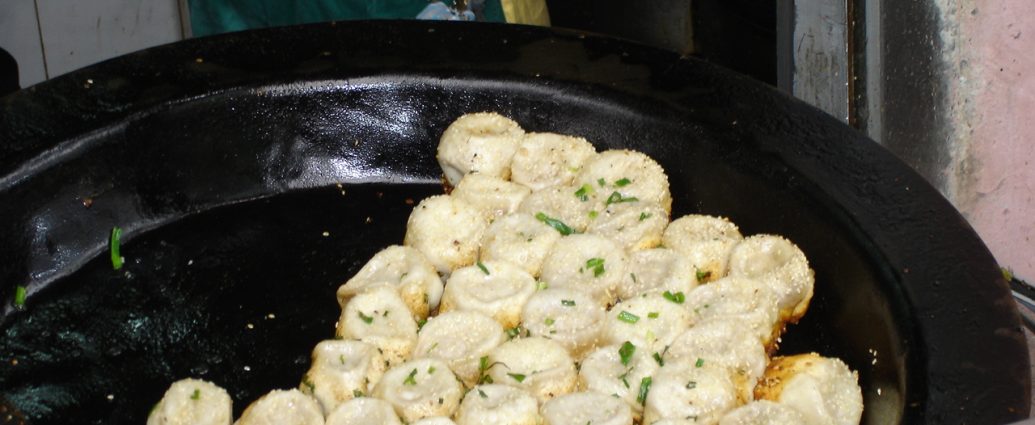
Sheng Jian Bao (生煎包) — Shanghai pan-fried pork buns — are the ultimate street breakfast: a soft, fluffy bun with a savory pork filling, a rich soupy center, and a shatteringly crisp, sesame-studded bottom. Bite off the top, sip the hot broth, then enjoy the contrast of crisp and cloud-soft in one mouthful.
Unlike their steamed cousin xiaolongbao, Sheng Jian Bao are pan-fried: the buns sit in a hot, oiled pan, water is added, and the lid traps steam to cook the tops while the bottoms crisp into golden crackle. They are believed to date to Shanghai’s early 20th century, when street vendors fried buns in shallow pans and sold them by the pair. This recipe recreates the full experience at home, dough included.
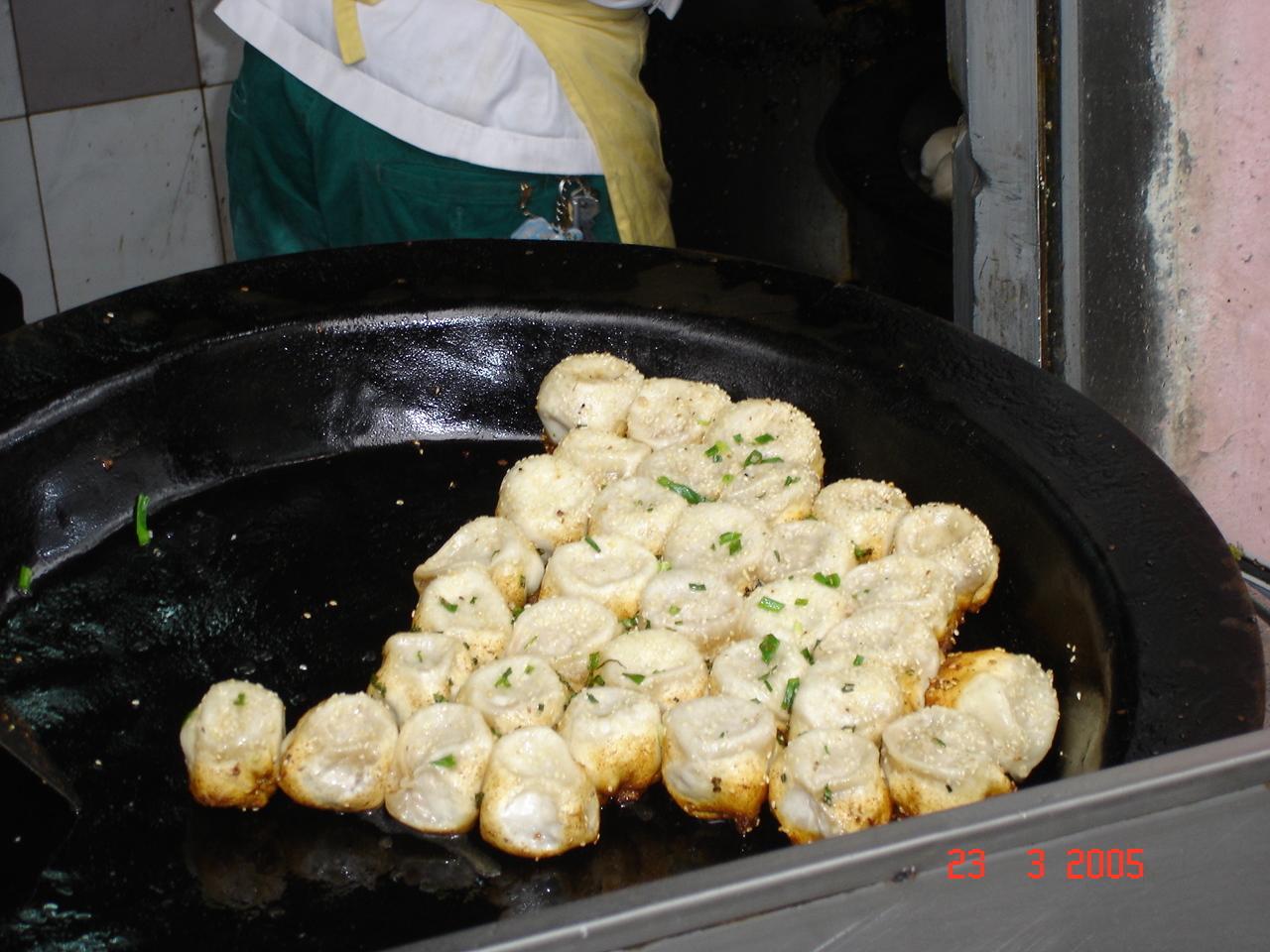
Photo via Wikimedia Commons, CC BY-SA 2.0
Two Schools of Sheng Jian
Shanghai’s 生煎 shops divide into two camps, and locals have firm opinions. The 混水派 (“mixed water” school) uses a leavened dough and a generous amount of aspic in the filling, producing a thicker, fluffier bun with a soupy center — this is the style most visitors encounter, and the one this recipe follows. The 清水派 (“clear water” school) uses a thinner, less risen dough with a simpler filling, giving a crisper, more delicate bun where the bottom crackle dominates. Both are correct; they are simply different pleasures.
Why Aspic Makes the Soup
The “soup” inside a sheng jian bao is not added as liquid — that would soak the dough. It comes from aspic: pork skin and bones simmered until their collagen dissolves into gelatin, then chilled until it sets into a firm jelly. Chopped into the filling, the aspic melts during cooking and becomes broth, held inside the sealed bun. This is the same principle behind xiaolongbao, and it is why the filling must be chilled and firm before wrapping. Get the aspic right and the bun delivers soup; skip it and you have an ordinary pork bun.
The Pan-Steam-Fry Method
- Arrange seam-side down in a hot oiled pan — the seam becomes the crisp bottom; crowding is fine, they should touch
- Fry briefly, then add water — a splash of water around the edge, then the lid goes on immediately
- Keep the lid on for the steam phase — about 8 minutes; the tops cook and the buns puff
- Uncover and let the water evaporate — you will hear the sound change from bubbling to sizzling
- Finish with a drizzle of oil and sesame seeds — the final minute is what sets the golden crust
- Invert onto a plate in one motion — this presents the crisp bottoms up, which is how they are traditionally served
Ingredients and Where to Find Them
- Pork aspic — pork skin, simmered and chilled; or use a good gelatinous stock
- Ground pork — ground pork, with some fat for juiciness
- Sesame seeds — white sesame seeds for the traditional finish
Also needed: all-purpose flour, yeast, sugar, baking powder, ginger, scallions, light soy sauce, Shaoxing wine, sesame oil, white pepper, and oil for frying. Black sesame is sometimes used alongside white for the garnish.
How to Make Them
- Aspic: simmer 300g pork skin with ginger and scallion for 2 hours, strain, and chill until set; chop finely
- Filling: mix 400g (14 oz) ground pork with 150g chopped aspic, 2 tablespoons light soy, 1 tablespoon Shaoxing wine, 1 teaspoon sesame oil, 1 teaspoon sugar, ginger, scallions, and white pepper; chill 1 hour
- Dough: mix 400g (3.3 cups) flour, 1 teaspoon yeast, 1 teaspoon baking powder, 1 tablespoon sugar, and 220ml warm water; knead 8 minutes, rest 40 minutes
- Divide into 16 pieces, flatten, and wrap a tablespoon of chilled filling in each, pleating and sealing firmly
- Rest 15 minutes, then arrange seam-side down in a hot oiled pan and fry 2 minutes until the bases set
- Pour in 150ml water around the edge, cover immediately, and steam 8 minutes until the water evaporates
- Uncover, drizzle 1 tablespoon oil, scatter with sesame seeds and scallions, and fry 1 minute more; invert onto a plate and serve hot
Variations
- With crab roe — 蟹粉生煎 folds crab meat and roe into the filling; a luxurious Shanghai specialty
- With shrimp — diced shrimp added to the pork lightens and sweetens the filling
- Chicken version — ground chicken thigh with extra aspic works well and is leaner
- Vegetarian — mushroom and cabbage filling with a vegetable aspic made from agar; different but satisfying
Frequently Asked Questions
Why is there no soup inside my buns?
The aspic was missing, too little, or not chilled enough. The soup comes entirely from chopped pork aspic melting during cooking — add a generous amount, and make sure both the aspic and the mixed filling are thoroughly chilled before wrapping.
Why did my buns stick to the pan?
Not enough oil, or the pan was not hot enough when they went in. Use a generous tablespoon of oil in a non-stick or well-seasoned pan, and let it heat before adding the buns. If they do stick, add a little water and let the steam release them rather than forcing them with a spatula.
Can I freeze them?
Yes — freeze the shaped, uncooked buns on a tray, then bag them. Pan-fry from frozen, adding 2 extra minutes to the steaming time.
How do I eat them without burning myself?
Carefully. Nip a small opening in the side of the bun, let the steam escape for a few seconds, sip the broth, then eat the rest. The soup inside is genuinely scalding when the buns come off the pan.
More Hand-Held Snacks
Love buns and dumplings? Try my Potstickers 锅贴, the soupy Xiaolongbao 小笼包, or crispy Spring Rolls 春卷.
As an Amazon Associate, I earn from qualifying purchases. These are affiliate links at no extra cost to you.