
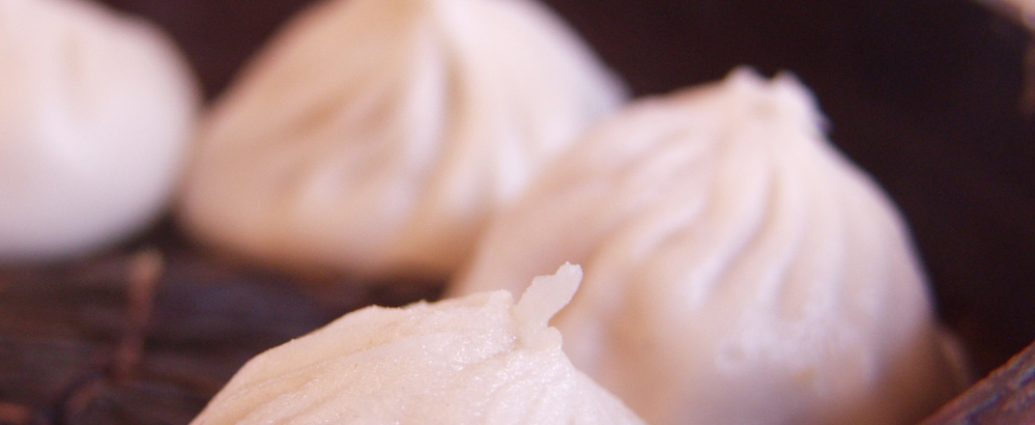
Xiaolongbao (小笼包) — Shanghai soup dumplings — are among the most beloved creations in Chinese cuisine: delicate, pleated parcels of paper-thin dough holding a savory pork filling and a burst of hot, gelatin-rich soup. The name translates to “small basket bun,” a nod to the bamboo steamers they are born in. Bite, sip, then savor — that is the ritual.
Xiaolongbao trace their lineage to Nanxiang, a town just outside Shanghai, where in the 1870s a dumpling maker began folding seasoned pork jelly into his buns. When steamed, the jelly melts into soup, a trick that turned a humble snack into an international icon. The magic is in two things: a silky, soupy filling and a wrapper thin enough to see through but strong enough to hold the broth.
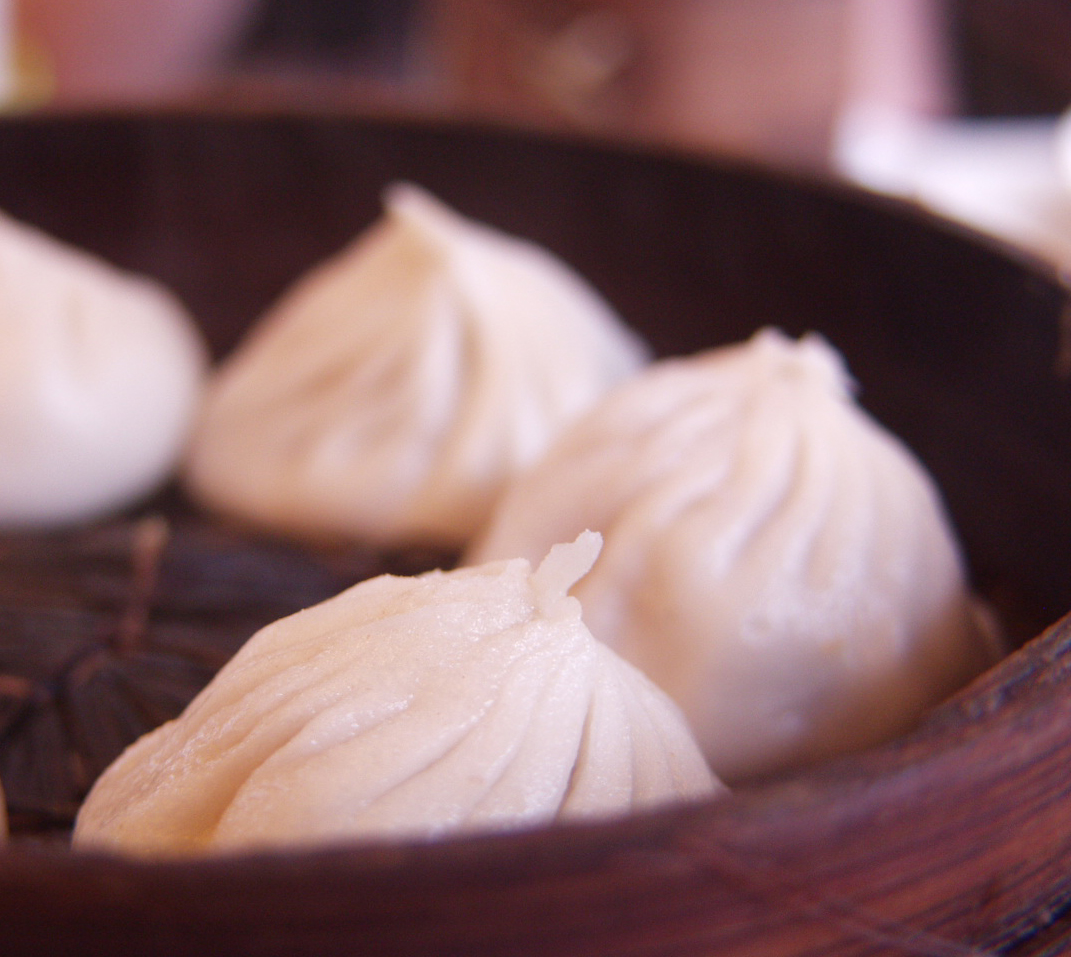
Photo via Wikimedia Commons, CC BY 2.0
The Soup Is Solid Before It Is Liquid
The defining trick of xiaolongbao is aspic — 皮冻. Pork skin and bones are simmered for hours until their collagen dissolves into gelatin, then the liquid is chilled until it sets into a firm, wobbly jelly. That jelly is chopped and folded into the pork filling. Inside the sealed dumpling, steam melts it back into broth, and because the wrapper holds, the soup stays inside until you bite. It is the same principle behind Sheng Jian Bao 生煎包, and it is why the filling must be chilled and firm before wrapping — a soft filling is impossible to pleat around.
From Nanxiang to the World
The dumpling’s history is unusually well documented for a Chinese street food. In the 1870s, a vendor named 黄明贤 in Nanxiang — then a separate town, now a district of Shanghai — began making his buns with a larger filling and a thinner skin than the prevailing style, and started folding pork aspic into the mixture. The innovation was an immediate local success, and by the early twentieth century the recipe had travelled the short distance into Shanghai proper, where shops along the city’s commercial streets began selling baskets of it. The name 小笼包 came from the small bamboo baskets (小笼) they were steamed and served in. Today the dish is a global icon, and the Nanxiang original is still made there — a rare case of a street snack with a traceable point of origin.
How to Serve Them
Xiaolongbao are eaten as a snack or a dim sum item, not a main course, and they are served in the basket they were steamed in. The classic accompaniment is a small dish of Chinkiang black vinegar with fine juliennes of young ginger — the vinegar cuts the richness of the pork and aspic, and the ginger refreshes the palate between dumplings. Some Shanghai shops add a few drops of chili oil. Eat them one at a time, while hot: the soup inside cools quickly and the wrapper stiffens as it sits, so a basket left standing for ten minutes is a different, lesser dish. Order them last, eat them first.
The Wrapper: Hot Water Dough, Thin but Strong
- Hot water dough — boiling water partially gelatinizes the flour, giving a tender, slightly translucent wrapper that stretches without tearing
- Roll the edges thin, keep the center thicker — the base must support the filling and the soup
- Aim for 18 pleats — the traditional standard; fewer is acceptable, but even pleating is what makes the seal hold
- Do not overfill — about a tablespoon of filling and aspic per dumpling; more and the wrapper bursts in the steamer
- Rest the dough 30 minutes — it rolls out far more easily and springs back less
- Steam 6–8 minutes only — longer and the wrappers turn soggy and the soup leaks
Ingredients and Where to Find Them
- Pork skin for aspic — pork skin, simmered into a set jelly
- Ground pork — ground pork, with some fat for juiciness
- Shaoxing wine — Shaoxing wine for the filling
Also needed: all-purpose flour, ginger, scallions, light soy sauce, sesame oil, sugar, white pepper, and salt. Chinkiang vinegar with julienned ginger is the classic dipping sauce.
How to Make Them
- Aspic: simmer 400g pork skin with ginger and scallion in 1.5 liters water for 2 hours; strain, chill until set, then chop finely
- Filling: mix 400g (14 oz) ground pork with 200g chopped aspic, 2 tablespoons light soy, 1 tablespoon Shaoxing wine, 1 teaspoon sesame oil, 1 teaspoon sugar, grated ginger, and white pepper; chill 1 hour
- Dough: pour 220ml boiling water over 400g (3.3 cups) flour, stir, then knead in 60ml cold water and 1 tablespoon oil until smooth; rest 30 minutes
- Roll the dough into a log and cut into 24 pieces; roll each into a thin round with a thicker center
- Place a tablespoon of chilled filling in the center, pleat 18 times around the edge, and seal with a twist
- Line a bamboo steamer with cabbage leaves or parchment and arrange the dumplings with space between them
- Steam over rapidly boiling water for 6–8 minutes; serve immediately with vinegar and ginger
Variations
- With crab roe — 蟹粉小笼 adds crab meat and roe to the filling; a Shanghainese autumn specialty
- With shrimp — chopped shrimp folded into the pork lightens and sweetens the filling
- With truffle — a modern Shanghai restaurant innovation; a few shavings add an earthy aroma
- With chicken — ground chicken thigh with extra aspic makes a leaner version
Frequently Asked Questions
Why did my dumplings tear or leak?
Usually the wrapper is too thin in the center or the dough was over-floured. Keep the center slightly thicker, and don’t overfill — about 1 tablespoon of filling per dumpling is right.
How do I eat a soup dumpling without burning myself?
Lift it with a spoon, nip a small opening in the side, let the steam escape for a few seconds, sip the broth, then eat the rest. Never put a whole dumpling straight into your mouth — the soup inside is scalding.
Can I use store-bought aspic or gelatin?
You can substitute unflavored gelatin set into a firm jelly, but the flavor will be plain rather than porky. Simmering real pork skin gives a richer, more savory result and is worth the effort.
Can I freeze them?
Yes — freeze assembled uncooked dumplings on a tray, then bag them. Steam from frozen for 9–10 minutes. Cooked dumplings do not reheat well, as the wrapper loses its texture.
More Street Snacks to Try
Craving more hand-held Chinese snacks? Try my Potstickers 锅贴, crispy Spring Rolls 春卷, or the classic street breakfast Jianbing 煎饼果子.
As an Amazon Associate, I earn from qualifying purchases. These are affiliate links at no extra cost to you.
1 Comment