
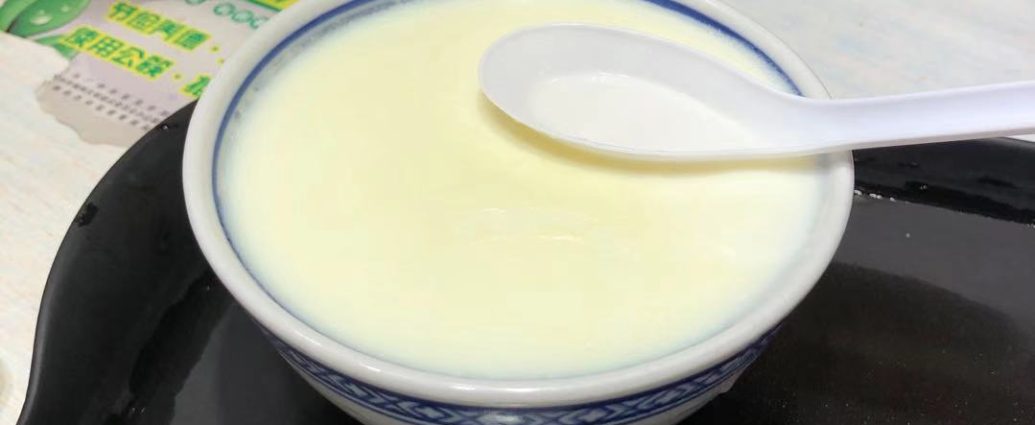
Double Skin Milk (双皮奶) is the pride of Shunde, the Cantonese food capital — a silky, chilled milk custard topped with a delicate skin of concentrated milk, sweet enough to feel indulgent and light enough to finish in three spoonfuls. Its texture is the magic: two layers of “skin” sandwiching a smooth, almost liquid center that melts on the tongue.
The dish begins with whole milk from the water buffalo herds around Shunde, which is so rich it forms a thick skin when simmered. The name 双皮 (double skin) describes the technique: milk is simmered, skimmed of its first skin, mixed with egg white and sugar, then steamed again so a second skin forms on top. The result is a dessert with a cult following — and one you can make at home with whole milk and patience.
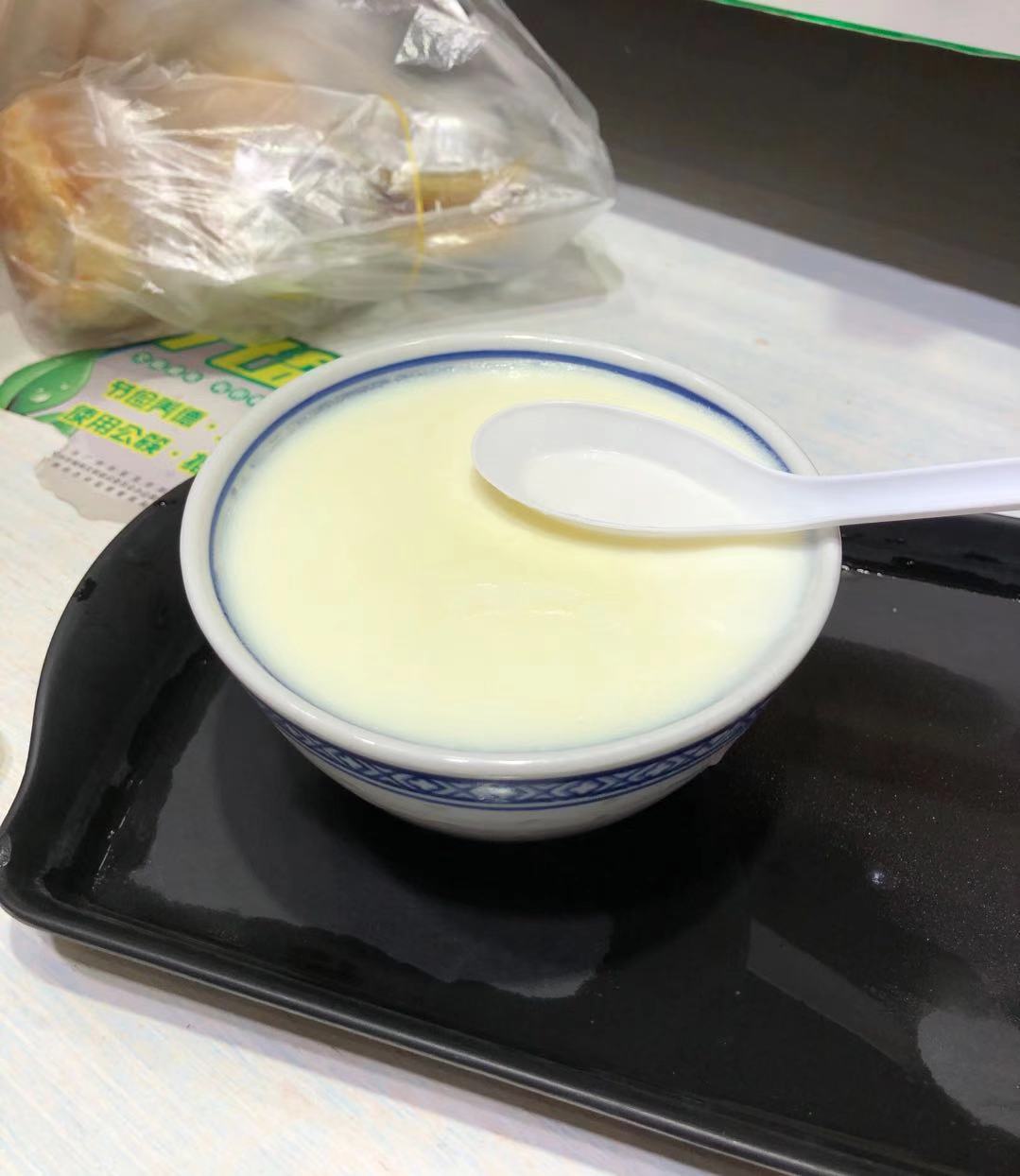
Photo via Wikimedia Commons, CC BY-SA 4.0
Shunde, in the Pearl River Delta, is regarded as one of the great culinary heartlands of Guangdong — a place where chefs are said to come from, and where dairy of all things became a local specialty. Water buffalo were kept for ploughing the rice paddies, and their exceptionally rich milk became the basis of a whole family of Shunde desserts: 双皮奶, 姜撞奶 (ginger milk curd), and 炸鲜奶 (fried milk). 双皮奶 is the most famous of them, a dessert so simple in its ingredients and so demanding in its technique that it has become a benchmark of a cook’s touch.
The Two Skins
The name is a literal description of the process, and it is worth understanding what each skin is:
- The first skin. Whole milk is simmered and then left to cool undisturbed. As it cools, the fat and proteins rise and form a thin, wrinkled layer on the surface — the first skin.
- The second skin. The milk beneath is poured out (carefully, leaving the first skin in the bowl), mixed with egg white and sugar, and poured back. It is then steamed, and a new, smoother skin forms on top as it sets.
The custard between the two skins is barely set — closer to a soft panna cotta than a firm flan. Getting there requires the right ratio of egg white to milk: too much and it turns rubbery and firm, too little and it never sets at all.
Getting the Texture Right
- Use the richest milk you can find — whole milk plus a splash of cream mimics Shunde’s buffalo milk; skim milk will not form a proper skin
- Egg white only, no yolk — yolk adds fat and color and prevents the clean white set
- About 1 egg white per 200ml milk — the classic ratio; adjust slightly if your milk is very rich
- Strain the mixture — removes bubbles and any stray egg white for a perfectly smooth surface
- Steam gently, covered — a cloth under the lid prevents drips; high heat makes the custard porous
- Cool completely, then chill — the set firms as it cools, and the skins are best defined when cold
Ingredients and Where to Find Them
- Whole milk — whole milk, the richest available
- Heavy cream — heavy cream, to approximate buffalo milk’s richness
- Caster sugar — caster sugar, which dissolves easily in cold milk
Also needed: egg whites and a pinch of salt. Some versions add a few drops of vanilla, though traditionalists keep it plain. That is genuinely the whole list — this is a four-ingredient dessert.
How to Make It
- Combine 500ml whole milk with 100ml heavy cream in a saucepan and heat to just below a simmer; pour into 4 shallow bowls
- Let cool undisturbed for 20 minutes until a wrinkled skin forms on each surface
- Carefully pour the milk out of each bowl into a jug, holding back the skin with a spoon and leaving it in the bowl
- Whisk 3 egg whites with 60g (1/4 cup) sugar and a pinch of salt until dissolved but not foamy
- Strain the egg white mixture into the milk and stir gently; skim off any foam
- Pour the mixture back into the bowls, sliding it under the first skin so it floats up
- Cover each bowl with foil and steam over gentle heat for 12 minutes until barely set; cool, then chill 2 hours and serve
Variations
- With ginger — a spoonful of ginger juice in the milk makes the Shunde classic 姜撞奶, which sets by curdling rather than steaming
- With red bean — a spoonful of sweet red bean paste at the bottom is a popular Hong Kong variation
- With mango — fresh mango purée alongside is a modern dim sum favorite
- With coconut milk — replacing part of the milk with coconut milk gives a lighter, tropical version
Frequently Asked Questions
Why did my double skin milk turn rubbery?
Too much egg white, or it was steamed too long or at too high a heat. Use roughly one egg white per 200ml of milk, steam gently over medium-low heat, and pull it from the steamer the moment the center is barely set — it firms further as it cools.
Why did no skin form?
The milk was not rich enough, or it was disturbed while cooling. Skim milk will not form a proper skin; use whole milk with a little cream added. Pour the milk into the bowls, then leave them completely undisturbed for at least 20 minutes.
Can I use skim or plant milk?
Not for the traditional version — the skins depend on milk fat and protein. Oat and soy milk can make a pleasant set custard, but it will not have the double skin that gives the dessert its name.
How long does it keep?
Kept chilled in covered bowls, Double Skin Milk stays fresh for up to 3 days. Let it come to room temperature for 10 minutes before serving for the best texture.
More Sweet Dim Sum
Love Cantonese sweets? Try my Custard Buns 奶黄包, the fluffy Malay Cake 马拉糕, or the molten Salted Egg Yolk Buns 流沙包.
As an Amazon Associate, I earn from qualifying purchases. These are affiliate links at no extra cost to you.

1 Comment