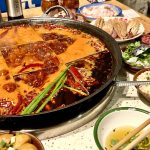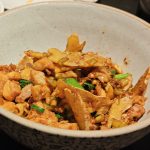
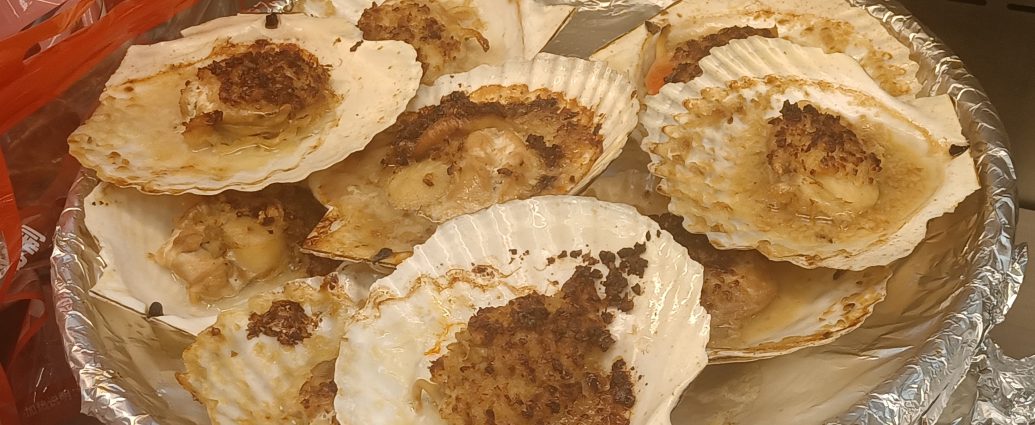
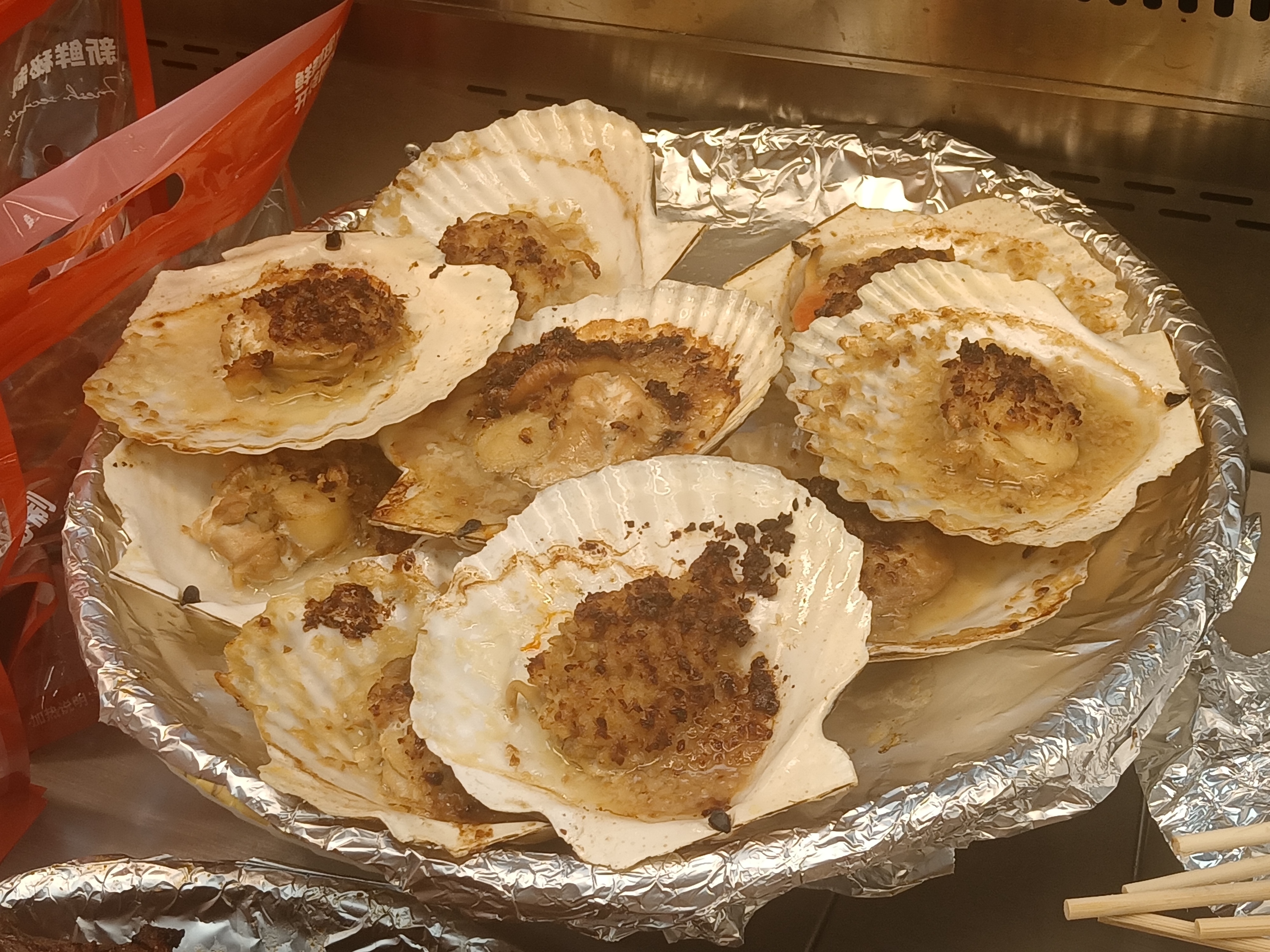
Steamed scallops with garlic vermicelli (蒜蓉粉丝蒸扇贝) is the dish that proves Cantonese cooking at its purest — sweet, briny scallops on the half shell, blanketed with golden garlic, a nest of glass noodles, and a spoonful of seasoned soy, then steamed for just minutes until everything is tender and glistening. It is a staple of Cantonese seafood banquets and dim sum tables alike, and one of the easiest showstoppers a home cook can master.
The magic is in the layering: the scallop steams in its own shell juices, the vermicelli drinks up the garlic oil and the sweet liquor, and the garlic is fried in two stages — half golden for sweetness, half raw for bite. In Guangdong, this exact preparation is applied to scallops, prawns, oysters, and clams; the scallop version, 蒜蓉粉丝蒸扇贝, is the most beloved. Ready in under 30 minutes, it is the definition of 鲜 (freshness) in Cantonese cooking.
鲜: The Cantonese Idea of Freshness
鲜 (xiān) is the word at the centre of Cantonese cooking, and it is not quite translatable. It means fresh, but it also means a particular kind of savory-sweetness that comes from good seafood cooked simply. Cantonese chefs talk about 鲜 as the quality you protect rather than create — the reason a fish is steamed rather than fried, the reason a broth is kept clear, the reason seasoning is restrained. 蒜蓉粉丝蒸扇贝 is a 鲜 dish in the fullest sense: the scallop is barely cooked, its liquor is captured by the vermicelli rather than discarded, and the garlic and soy exist to frame the sweetness rather than mask it. That is why the dish appears at banquets and in humble dim sum restaurants alike — it is impressive without being complicated, and it relies entirely on the quality of the shellfish.
The Two-Stage Garlic
- Golden-fried garlic (炸蒜) — chopped garlic fried gently until pale gold; sweet, mellow, and nutty
- Raw garlic (生蒜) — stirred in off the heat; sharp, pungent, and aromatic
- Mixed together with a little oil — the combination gives both depth and bite, which neither achieves alone
- Medium-low heat only — garlic turns bitter the moment it browns past gold, so pull the pan early
- A pinch of salt and sugar — the sugar is essential; it rounds the garlic and echoes the scallop’s sweetness
- Make extra — the garlic mixture keeps for a week and is used on prawns, oysters, and steamed eggplant
The Vermicelli
Mung bean vermicelli are chosen for their neutrality and their ability to absorb. Soaked in warm water until pliable, then coiled into a small nest under each scallop, they catch the garlic oil, the seasoned soy, and — most importantly — the scallop’s own juices as it steams. The result is that the noodles become the most flavorful part of the dish. Do not skip them, and do not over-soak: pliable but still firm is the right texture, since they finish cooking in the steamer.
Ingredients and Where to Find Them
- Scallops in the shell — scallops on the half shell, or large scallops with shells
- Mung bean vermicelli — glass noodles
- Seasoned soy sauce — seasoned soy sauce
Also needed: a large head of garlic, scallions, ginger, light soy sauce, sugar, Shaoxing wine, white pepper, and a neutral oil. Some versions add a little oyster sauce or a pinch of chili.
How to Make It
- Soak 60g (2 oz) mung bean vermicelli in warm water for 15 minutes; drain and cut into shorter lengths
- Make the garlic mixture: fry 6 tablespoons chopped garlic in 4 tablespoons oil over medium-low heat until pale golden, then off the heat stir in 2 tablespoons raw chopped garlic, 1/2 teaspoon salt, and 1/2 teaspoon sugar
- Clean 12 scallops on the half shell, keeping the roe if present; pat dry
- Coil a small nest of vermicelli onto each shell and set the scallop on top
- Spoon the garlic mixture generously over each scallop and drizzle with 1 teaspoon Shaoxing wine
- Steam over rapidly boiling water for 5–6 minutes, until the scallops are just opaque
- Drizzle with a mix of 2 tablespoons light soy, 1 teaspoon sugar, and 2 tablespoons water; scatter with scallions and serve immediately
Variations
- With prawns (蒜蓉粉丝蒸虾) — butterflied prawns on the shell with the same garlic and vermicelli
- With oysters — 蒜蓉粉丝蒸生蚝, a common barbecue and banquet dish
- With scallop and black bean — a spoonful of fermented black beans added to the garlic mixture
- With chili — a few chopped bird’s eye chilies stirred into the garlic for heat
Frequently Asked Questions
Why did my garlic turn bitter?
Garlic turns bitter when it browns too far. Fry it over medium-low heat just until pale golden, then immediately pull the pan off the heat and stir in the raw garlic — the residual heat finishes the job without scorching.
How long should I steam the scallops?
Five to six minutes over rapidly boiling water for medium scallops. They are done the moment the flesh turns opaque and firm; longer and they become rubbery and lose their sweetness.
Can I use frozen scallops?
Yes — thaw them completely, pat very dry, and reduce the steaming time by a minute. Fresh scallops are noticeably sweeter, but frozen work well, especially with the garlic and vermicelli carrying much of the flavor.
What if I cannot get scallops in the shell?
Use large scallop meats and steam them on a bed of vermicelli in a shallow dish. The presentation is less dramatic, but the flavor is the same. Small ramekins or scallop shells bought separately also work.
More Cantonese Seafood Favorites
Love Cantonese seafood? Try my Steamed Fish 清蒸鱼, the crunchy Salt and Pepper Prawns 椒盐虾, or the iconic Typhoon Shelter Crab 避风塘炒蟹.
As an Amazon Associate, I earn from qualifying purchases. These are affiliate links at no extra cost to you.