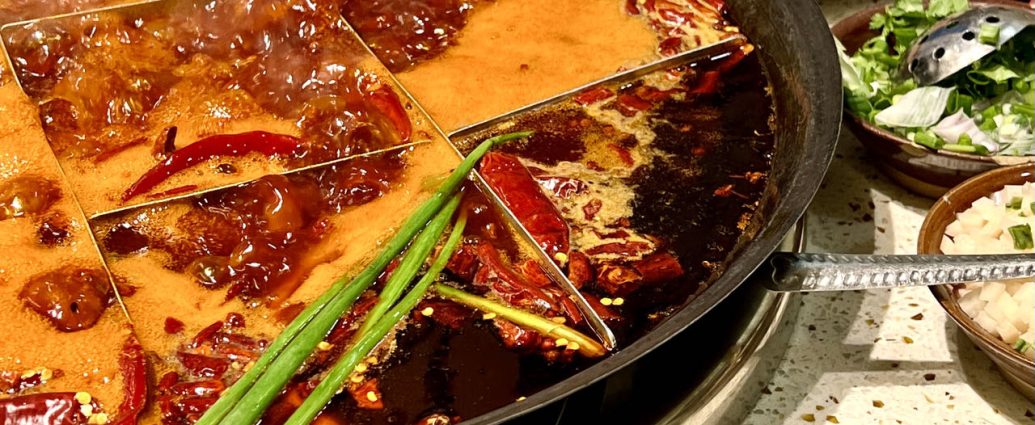
Chongqing hotpot (重庆火锅) is the fiery soul of Sichuan-Chongqing cuisine — a bubbling cauldron of dark-red, oil-rich broth so numbing and spicy that it defines the city that invented it. Around the table, diners cook paper-thin slices of beef tripe, tender beef, and vegetables in the roiling pot, then dip them in sesame oil with garlic. It is not a meal; it is an event.
What sets Chongqing hotpot apart is its beef-fat and chili-oil base — traditionally a 九宫格 (nine-grid) pot whose metal dividers keep different ingredients cooking in separate compartments while the broth circulates. Born in the 1920s among the port workers and boatmen of Chongqing’s river docks, the “mala hotpot” (麻辣火锅) grew into China’s most exported food phenomenon. This recipe shows you how to build an authentic broth at home — from scratch or with a good base — plus the dipping sauce ritual that makes it complete.
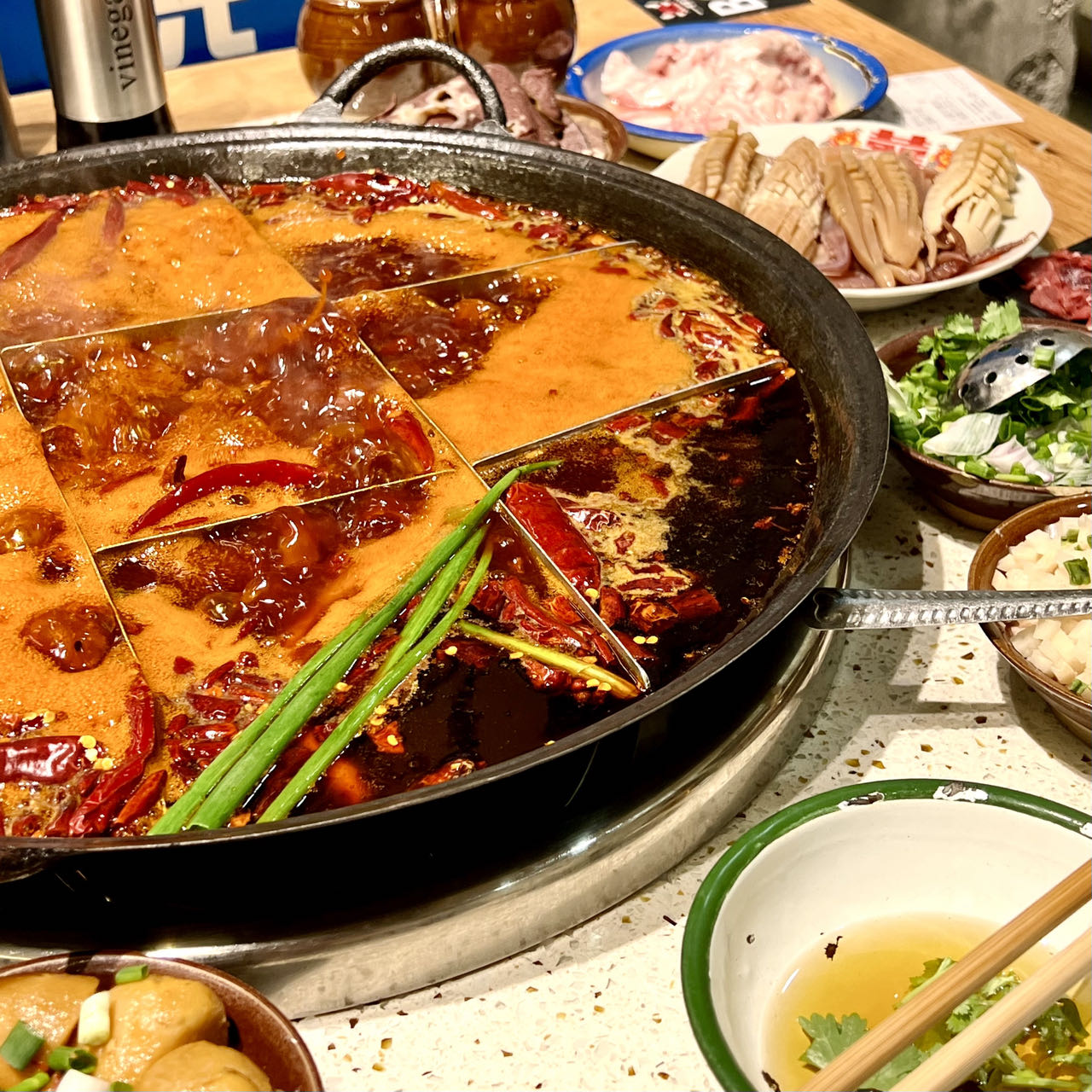
Photo via Wikimedia Commons, CC BY-SA 4.0
From the River Docks
Chongqing’s hotpot began as working-class food. In the 1920s, the city was a major inland river port, and the boatmen and dockworkers who laboured along the Yangtze needed something cheap, hot, and filling. Their solution was to cook whatever offal and cheap cuts they could get in a heavily spiced, oil-rich broth — the strong seasoning made the less desirable parts palatable, and the beef fat provided calories for hard physical work. Vendors set up along the wharves, and the format spread. Over the following decades it moved from the docks into restaurants, the ingredients moved upmarket, and the dish became a point of civic identity. Chongqing today has tens of thousands of hotpot restaurants, and the city treats the dish with the seriousness other places reserve for a national cuisine.
The Nine-Grid and the Beef Tallow
- 牛油 (beef tallow) — the defining ingredient; it carries the chili and peppercorn flavor, clings to ingredients, and gives the broth its heavy, glossy body
- 九宫格 (nine-grid) — a metal grid dividing the pot into nine zones with different temperatures, letting diners manage ingredients by cooking speed
- The centre boils hottest — used for quick-cooking items like tripe, which is swished for seconds only
- The corners are cooler — for slow-cooking items like potato, lotus root, and blood curd that need time
- Doubanjiang and dried chilies — fermented broad bean paste supplies the savory depth; dried chilies supply the heat
- Sichuan peppercorns — added for the numbing 麻 sensation that distinguishes Sichuan-style from plain spicy
- No dipping into the communal pot twice — the etiquette is to use your own chopsticks and never return a bitten item to the broth
The Dipping Sauce Ritual
The dip is as standardized as the broth: sesame oil with minced garlic, and sometimes cilantro or chopped scallion. It is deliberately plain. The oil coats each piece and cools it slightly, and the garlic cuts the richness of the beef tallow — so the sauce does not compete with the broth, it moderates it. Vinegar is often offered alongside, especially for seafood, and a little oyster sauce or fermented bean curd sometimes joins the mix. Notably absent is soy sauce: the broth is already intensely seasoned, and adding more salt would be redundant.
Ingredients and Where to Find Them
- Hotpot base (火锅底料) — Chongqing hotpot base, for the shortcut version
- Beef tallow — beef tallow, the authentic base fat
- Sichuan peppercorns — whole Sichuan peppercorns
Also needed: Pixian doubanjiang, dried chilies, garlic, ginger, star anise, cinnamon, bay leaves, rock sugar, and Shaoxing wine. For dipping: sesame oil, garlic, cilantro, and vinegar. For cooking: beef tripe, sliced beef, pork blood curd, tofu skin, lotus root, potato, mushrooms, and greens.
How to Make It
- From scratch: melt 200g (7 oz) beef tallow in a wide pot over low heat
- Add 4 tablespoons doubanjiang and fry gently for 10 minutes until the oil turns deep red
- Add 30g dried chilies, 2 tablespoons Sichuan peppercorns, garlic, ginger, star anise, cinnamon, and bay leaves; fry 5 minutes
- Add 2 liters stock with 20g rock sugar and 2 tablespoons Shaoxing wine; simmer 30 minutes, then season with salt
- Shortcut: melt a quality hotpot base block in 2 liters stock, add fresh chilies and peppercorns, and simmer 15 minutes
- Set the pot on a portable burner at the table and bring to a rolling simmer
- Mix the dip: 3 tablespoons sesame oil, 2 minced garlic cloves, cilantro, and a splash of vinegar per person
- Cook tripe for 10–15 seconds, sliced beef for 20–30 seconds, and vegetables and blood curd for several minutes
Variations
- 鸳鸯锅 (mandarin duck pot) — a divided pot with mild bone broth on one side for those who cannot take the heat
- With 藤椒 (rattan pepper) — a greener, more floral numbing oil alongside the chili
- Milder base — reduce the dried chilies and doubanjiang; keep the peppercorns for the numbing character
- With seafood — prawns, squid, and fish balls cook quickly and suit the broth well
Frequently Asked Questions
Can I make Chongqing hotpot without beef tallow?
Yes — vegetable or peanut oil will work, and many restaurants now offer a non-beef version. The broth will be lighter and less clingy, but the chili and peppercorn still deliver the mala character. Beef tallow is what gives the authentic heavy, coating mouthfeel.
What is the nine-grid for?
Temperature control. The centre of a nine-grid pot is the hottest, so it is used for quick-cooking items like tripe that need only seconds. The outer compartments are cooler, for ingredients like potato and lotus root that need several minutes. It is a practical device, not decoration.
Is there a shortcut for the broth?
Yes — quality Chongqing hotpot base blocks (火锅底料) are widely available and authentic. Melt the block in 2 liters of stock, add fresh chilies, Sichuan peppercorns, and garlic, and simmer 15 minutes. This recipe’s from-scratch broth is for when you want full control.
What should I dip the cooked food in?
Sesame oil with minced garlic is the standard. It cools the food, carries the aromatics, and moderates the richness of the beef tallow. Add cilantro, scallion, or a splash of vinegar to taste — but not soy sauce, since the broth is already well seasoned.
More Sichuan & Hotpot Favorites
Love the numbing-spicy style? Try my Mala Xiang Guo 麻辣香锅, the fiery Mao Xue Wang 毛血旺, or the clear-broth contrast of Chaoshan Beef Hotpot 潮汕牛肉火锅.
As an Amazon Associate, I earn from qualifying purchases. These are affiliate links at no extra cost to you.