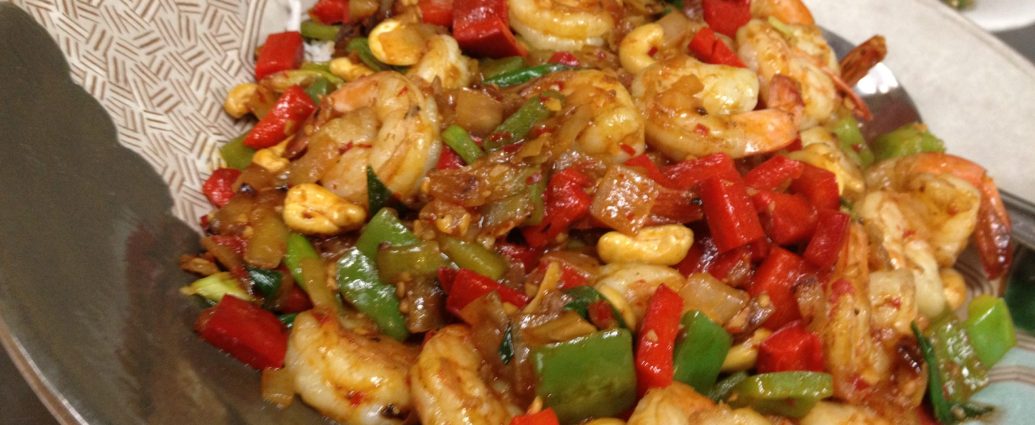
Gong Bao Xia Ren (宫保虾仁) brings the iconic Sichuan flavor profile of Gong Bao — numbing Sichuan peppercorns, dried chilies, and a sweet-savory-sour sauce — to succulent, plump shrimp. It is lighter than the chicken version but every bit as bold, with a silky sauce that clings to each shrimp and a crunch from roasted peanuts.
The dish descends from 宫保鸡丁, the Sichuan classic named for Ding Baozhen, the Qing dynasty governor who held the honorary title 宫保 (gōng bǎo, “palace guardian”). Swapping chicken for shrimp is a natural evolution — Sichuan cooks have long applied the same sauce to prawns, scallops, and squid — and it produces a dish that feels more delicate while keeping the full sweet-sour-numbing architecture intact. The technique shifts slightly too: shrimp need far less time in the wok, so the emphasis moves from cooking to not overcooking.
This version was inspired by a seafood restaurant in Qingdao, where the chef showed me that the key to great Gong Bao shrimp is velveting — a quick cornstarch marinade that keeps the shrimp impossibly tender and juicy.
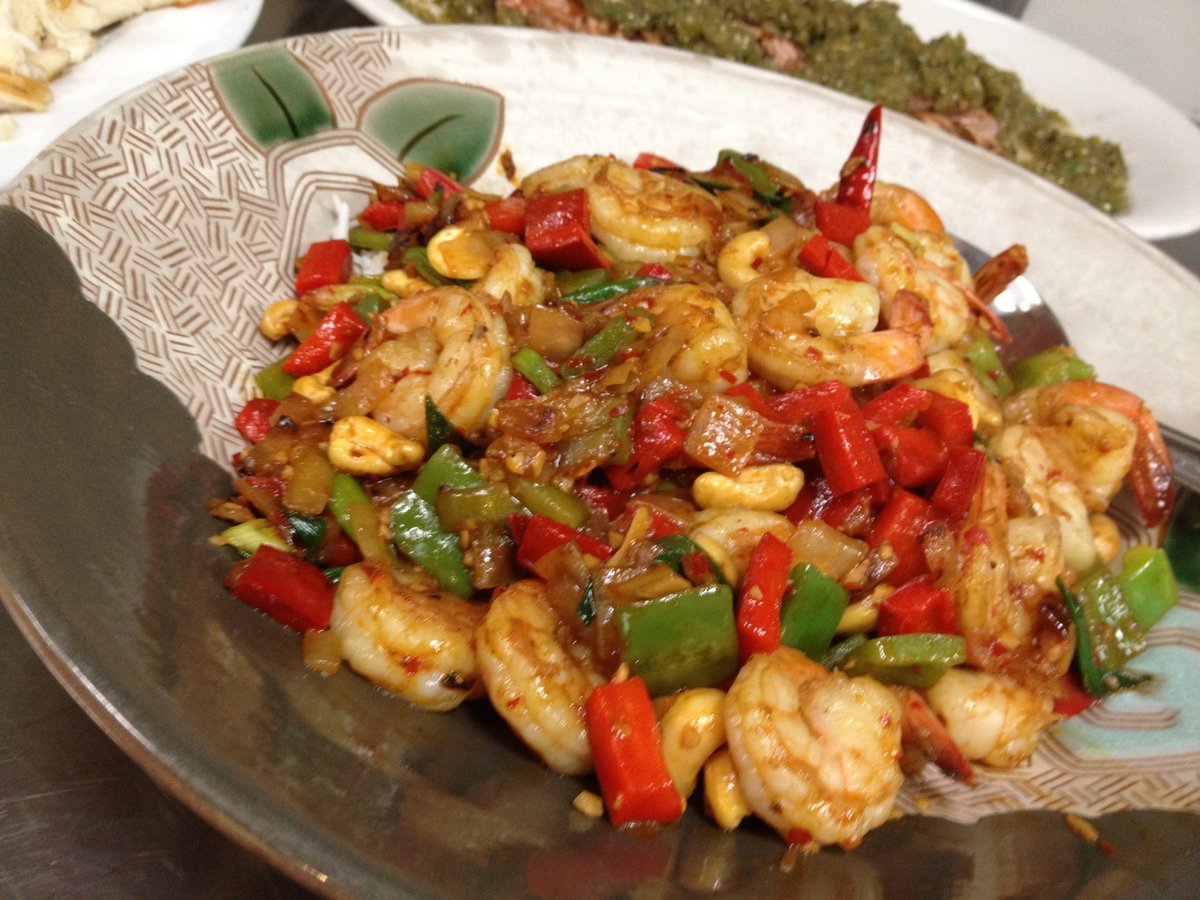
Why Velveting Shrimp Changes the Dish
Shrimp are almost all protein and water, with almost no fat to protect them from heat. In a screaming-hot wok, an uncoated shrimp sheds moisture and tightens into a rubbery curl within seconds. Velveting solves this: a brief marinade of cornstarch, egg white, and rice wine wraps each shrimp in a thin protective sheath that seals in moisture and turns silky rather than crisp. The shrimp come out plump, glossy, and tender even if you are a few seconds late pulling them from the pan — which, with shrimp, you almost always are.
Choosing the Shrimp
The quality of the shrimp matters more here than in almost any other stir-fry, because the dish is built to let them lead. Look for firm, translucent flesh with no ammonia smell — the latter is the clearest sign of a shrimp that has been sitting too long. Size is a matter of preference, but medium-to-large shrimp (around 20–25 per pound) hold up best: small ones overcook before they take on any sauce, and very large ones can stay raw in the centre while the outside tightens. If you are using frozen shrimp, thaw them completely, pat them bone dry, and consider a brief soak in cold salted water to firm the texture — frozen shrimp are often treated with a phosphate solution that makes them release water in the wok, which dilutes the sauce and steams rather than sears them.
The Gong Bao Balance
宫保 is defined by a precise tension between four sensations. Miss any one and the dish reads as ordinary stir-fry:
- 辣 (spicy) — dried chilies, snipped and shaken free of most seeds for fragrance over raw heat
- 麻 (numbing) — freshly ground Sichuan peppercorn, added at the end so the tingle stays bright rather than cooked away
- 酸甜 (sweet-sour) — Chinkiang vinegar and sugar in the classic ratio, plus light soy for salt and depth
- Crunch — roasted peanuts folded in at the very last second so they never soften
Ingredients and Where to Find Them
- Large shrimp — large raw shrimp, peeled and deveined, tails optional
- Sichuan peppercorns — whole Sichuan peppercorns for the numbing layer
- Chinkiang black vinegar — Chinkiang vinegar gives the sauce its malty sourness
Also needed: dried red chilies, garlic, ginger, scallions, light and dark soy, sugar, Shaoxing wine, cornstarch, egg white, and roasted peanuts. Everything is a standard pantry item for anyone who cooks Chinese food.
How to Cook It
- Peel and devein 500g (1.1 lb) large shrimp; pat dry and marinate 15 minutes with 1 egg white, 1 tablespoon cornstarch, 1 teaspoon Shaoxing wine, and 1/2 teaspoon salt
- Mix the sauce: 1 tablespoon light soy, 1 tablespoon Chinkiang vinegar, 2 teaspoons sugar, 1 teaspoon dark soy, 1 teaspoon cornstarch, and 2 tablespoons water
- Snip 8 dried chilies into sections and shake out most seeds; grind 1 teaspoon Sichuan peppercorns
- Heat a wok until smoking, add oil, and sear the shrimp in a single layer for 45 seconds per side until just pink; remove
- Lower the heat, add the chilies and peppercorns, and stir 20 seconds until fragrant — do not let them blacken
- Add garlic, ginger, and scallion whites; stir 20 seconds, then pour in the sauce
- Return the shrimp and toss over high heat 30 seconds until glossy; fold in peanuts and scallion greens and serve immediately
Variations
- With chicken — the original version; dice thigh, velvet it, and cook 2–3 minutes per side. See my Kung Pao Chicken 宫保鸡丁
- With scallops — sear 60 seconds per side only; they are even more heat-sensitive than shrimp
- Extra numbing — finish with 1 teaspoon of 藤椒油 (green peppercorn oil) for a sharper tingle
- With cashews — a Cantonese-leaning swap; see my Cashew Chicken 腰果鸡丁
Frequently Asked Questions
Why did my shrimp turn rubbery?
They were overcooked — shrimp need only 45–60 seconds per side at high heat. Velveting helps protect them, but nothing rescues shrimp left in the wok for three minutes. Pull them the moment they turn opaque and curl into a loose C shape.
Can I make this with chicken instead?
Absolutely — use diced chicken thigh, velvet the same way, and cook 2-3 minutes per side instead. The classic Gong Bao Ji Ding (宫保鸡丁) is the original version of this dish.
Is this very spicy?
It is aromatic rather than punishing. Most of the heat lives in the chili seeds, so removing them gives a mild, fragrant dish. Sichuan peppercorns add a citrusy numbness rather than fire. Leave the seeds in for a hotter version.
Can I use frozen shrimp?
Yes — thaw them completely, pat them bone dry, and consider a 10-minute soak in cold salted water to firm the texture. Frozen shrimp often carry a phosphate solution that makes them release water, so dry them especially well before velveting.
More Sichuan & Seafood Favorites
Love the mala style? Try my Mao Xue Wang 毛血旺, the crunchy Salt and Pepper Prawns 椒盐虾, or the cold Bo Bo Chicken 钵钵鸡.
As an Amazon Associate, I earn from qualifying purchases. These are affiliate links at no extra cost to you.