
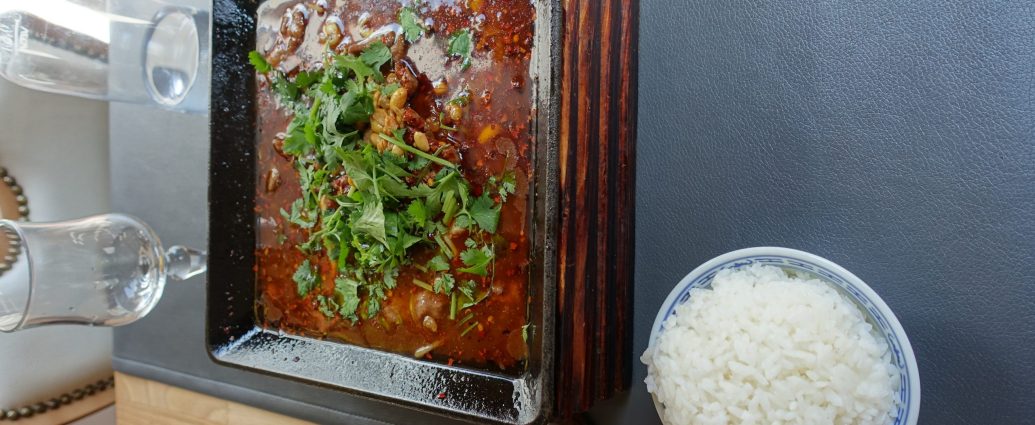
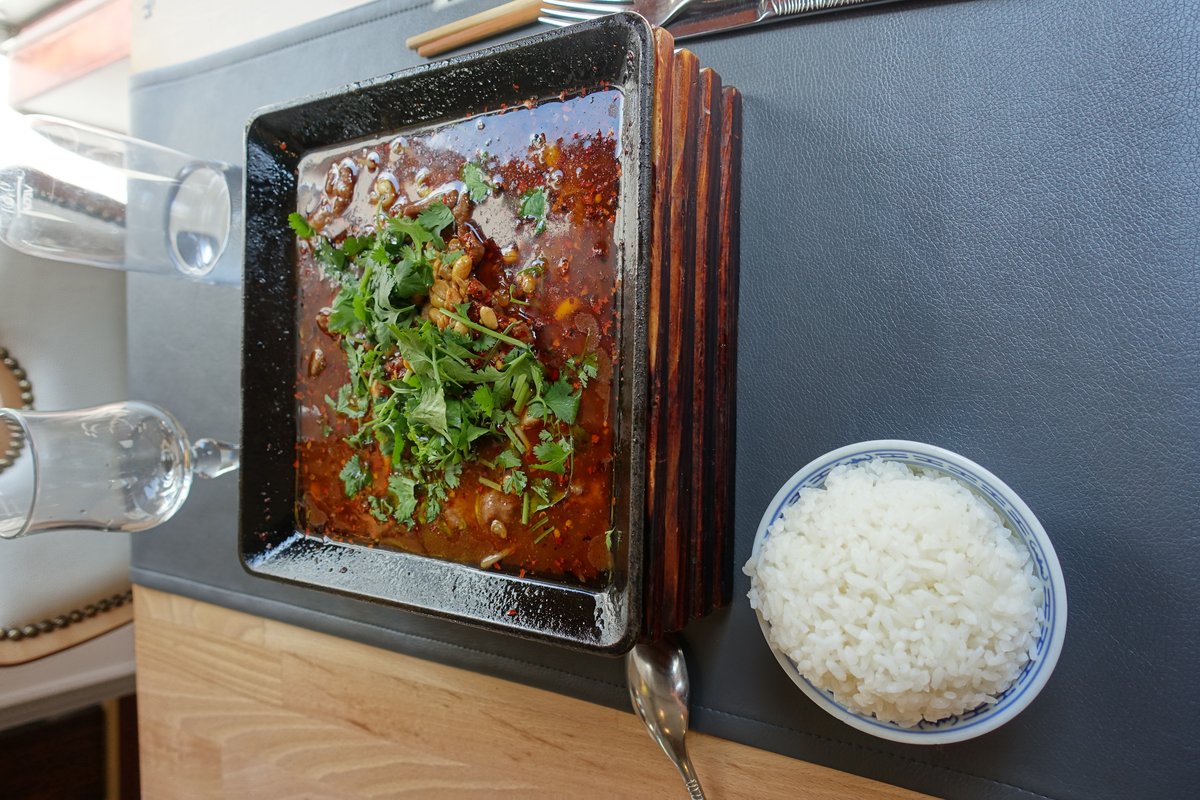
Shui Zhu Niu Rou (水煮牛肉) translates literally to “water-cooked beef,” but do not let the name fool you — this is one of the most thrilling dishes in the Sichuan repertoire. Tender slices of beef are cooked in a fiery, aromatic broth loaded with dried chilies and Sichuan peppercorns, then crowned with a sizzling pour of hot chili oil that makes the whole table lean in.
This recipe comes from a chef in Chongqing who taught me that the secret is not in the “boiling” but in the final oil pour — that sizzling cascade of hot chili oil over garlic and peppercorns is what elevates this dish from soup to spectacle.
What 水煮 Really Means
The name is a piece of Sichuan understatement. 水煮 (shuǐ zhǔ) literally means “water-boiled,” and in the regional vocabulary it describes a family of dishes in which the main ingredient is poached in a seasoned broth rather than fried — the emphasis is on the gentle cooking method. But the dish that arrives at the table is swimming in chili oil, layered with dried chilies and Sichuan peppercorn, and crowned with a final pour of smoking oil. The contrast between the plain-sounding name and the dramatic result is part of the joke, and locals are fond of it. The family includes 水煮鱼 (fish), 水煮肉片 (pork), and 水煮牛肉 — all built on the same architecture: poached protein, vegetable bed, chili-and-peppercorn topping, hot oil pour.
Why the Oil Pour Matters
- Heat extracts aromatics — chili flakes, garlic, and ground Sichuan peppercorn release their fragrance only when hot oil hits them
- The oil must be smoking — around 200°C (390°F); cooler oil leaves a raw, dusty taste instead of a bloom
- Pour it at the table — the sizzle and the rising aroma are part of the dish, and the effect fades within seconds
- Layered heat — dried chilies in the broth for depth, chili flakes in the topping for color and sharpness, peppercorns for numbness
- Do not stir after pouring — let the layers sit so each spoonful carries a different intensity
- Use a heatproof serving bowl — the oil is genuinely hot and will crack a cold or thin dish
Velveting the Beef
Beef slices in this dish are cooked in a simmering broth, which is a gentler treatment than stir-frying — but the slices are thin and the broth is hot, so they still toughen quickly without protection. Velveting solves it: cornstarch, egg white, a splash of water, and a pinch of baking soda, worked into the slices and left for twenty minutes. The coating seals the surface and keeps the beef silky even in the aggressive broth. Add the slices one at a time, in a single layer, and do not stir for the first thirty seconds — stirring knocks the coating off and clouds the broth.
Ingredients and Where to Find Them
- Beef — beef flank or sirloin, sliced thin against the grain
- Pixian doubanjiang — doubanjiang for the broth base
- Sichuan peppercorns — whole Sichuan peppercorns, ground fresh for the topping
Also needed: dried red chilies, chili flakes, garlic, ginger, scallions, bean sprouts or napa cabbage, light soy sauce, Shaoxing wine, cornstarch, egg white, baking soda, and a generous quantity of oil.
How to Cook It
- Slice 400g (14 oz) beef thinly against the grain; marinate 20 minutes with 1/4 teaspoon baking soda, 1 egg white, 2 teaspoons cornstarch, 1 tablespoon Shaoxing wine, and 1 tablespoon water
- Blanch 300g (10.5 oz) bean sprouts or napa cabbage for 1 minute and spread in the base of a deep heatproof bowl
- Heat 3 tablespoons oil and fry 2 tablespoons doubanjiang, 10 dried chilies, garlic, and ginger for 2 minutes until the oil turns red
- Add 800ml stock or water with 1 tablespoon light soy and simmer 5 minutes
- Slide the beef slices in one at a time and poach 90 seconds without stirring, until just opaque; pour everything over the vegetables
- Mound 2 tablespoons chili flakes, 1 tablespoon ground Sichuan peppercorn, and minced garlic on top
- Heat 150ml oil until smoking and pour it over the aromatics; scatter with scallions and serve immediately
Variations
- With fish (水煮鱼) — the more famous sibling; use white fish fillets and reduce the poaching to 60 seconds
- With pork (水煮肉片) — thinly sliced pork loin, treated identically
- With 藤椒 (rattan pepper) — a fresher, greener version with a floral numbing note
- Less oil — reduce the final pour to 80ml; less dramatic but considerably lighter
Frequently Asked Questions
Why is my beef tough?
It was sliced with the grain or overcooked. Cut across the muscle fibers into thin slices, velvet with cornstarch and egg white, and poach for no more than 90 seconds. The residual heat of the broth continues cooking the slices after they come off the stove.
Why does my dish taste raw rather than fragrant?
The final oil was not hot enough. It needs to be smoking — around 200°C (390°F) — so the chili flakes and peppercorn bloom instantly. Pour it in one motion over the aromatics and do not stir.
Can I make it less spicy?
Yes — reduce the dried chilies and chili flakes, and use a mild doubanjiang. Keep some Sichuan peppercorn for the numbing note, which is distinct from heat. The dish will be milder but still aromatic.
What vegetables work best underneath?
Bean sprouts are traditional for their crunch. Napa cabbage, lettuce, and blanched potato slices are all common. Whatever you choose, blanch it first so it is cooked through before the hot broth goes on top.
More Sichuan Classics to Try
Love Sichuan food? Try my Mao Xue Wang 毛血旺, the elegant Zhang Cha Duck 樟茶鸭, or the street-style Bo Bo Chicken 钵钵鸡.
As an Amazon Associate, I earn from qualifying purchases. These are affiliate links at no extra cost to you.
1 Comment