
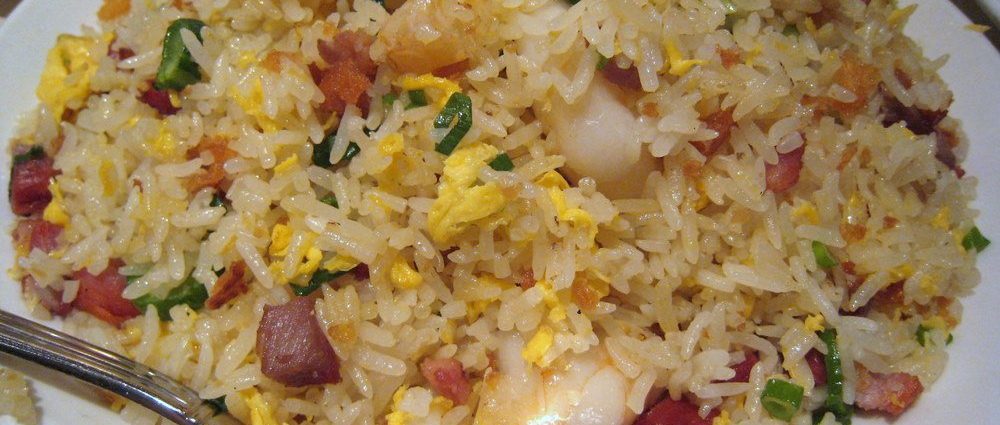
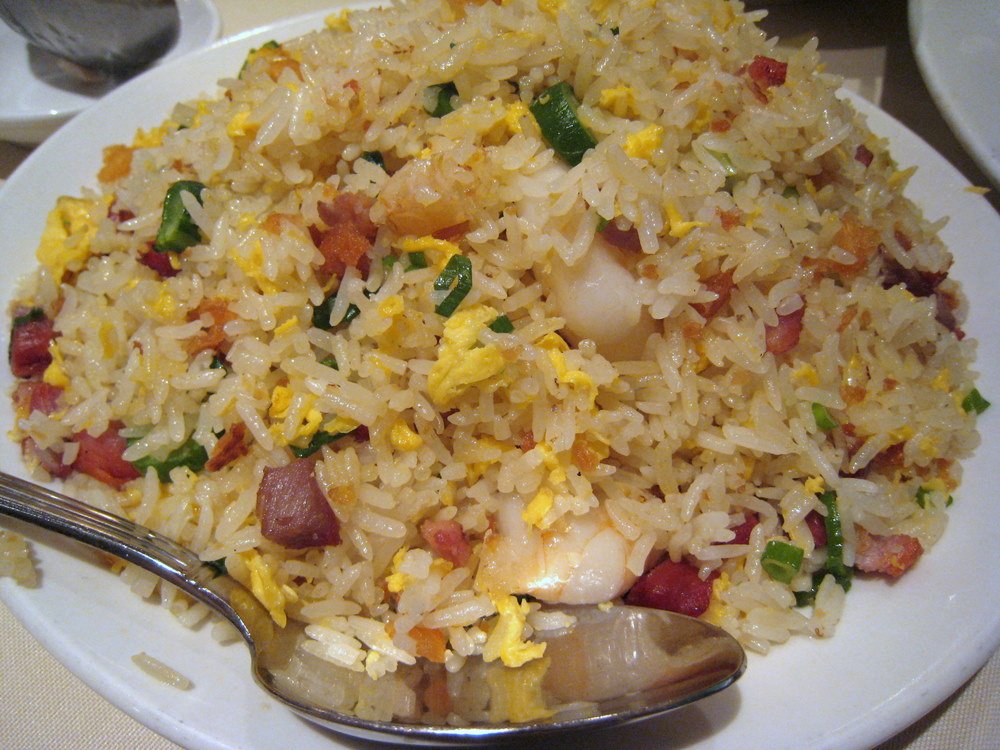
Yangzhou Fried Rice (扬州炒饭) is the gold standard of Chinese fried rice — fluffy, separate grains of rice studded with delicate strips of ham, shrimp, egg, and vegetables, each component perfectly cooked and seasoned. Unlike heavy takeout versions, authentic Yangzhou fried rice is light, elegant, and lets each ingredient shine.
The dish’s history reaches back to the Qing dynasty, when the poet and official Yi Bingshou (伊秉绶) — a Yangzhou native — served a fried rice at his table that combined egg, ham, and shrimp. It traveled, was refined in the city’s banquet kitchens, and by the late Qing had become the standard-bearer of Chinese fried rice. The dish even has an official standard in Yangzhou today, specifying the ingredients and their proportions — a rare honor for a home dish. What makes it distinct from ordinary 蛋炒饭 is restraint and precision: the rice is the canvas, and each addition is cut small and added in a specific order so nothing turns greasy or clumped.
This recipe comes from a chef in Yangzhou who taught me the cardinal rule of fried rice: the rice must be day-old and cold. Freshly cooked rice releases too much steam and turns mushy. Cold rice, on the other hand, fries into perfectly separate, slightly chewy grains.
Why Day-Old Rice Is Non-Negotiable
Freshly cooked rice is coated in surface starch and full of steam. In a wok, that moisture turns to a sticky paste and the grains clump into a heavy mass. Chilling overnight changes the starch structure — a process called retrogradation — so the grains firm up and dry out. When they hit the wok, they separate and toast individually rather than steaming together. If you must cook rice fresh, spread it on a tray and refrigerate it uncovered for at least two hours; the goal is dry, cold, and loose, not just cooked.
The Order of Operations
Yangzhou fried rice is a dish of sequencing. Each ingredient needs a different amount of time and heat, so they go in one at a time:
- Egg first — scrambled soft, then removed or pushed aside, so it stays silky instead of drying into pellets
- Aromatics — scallion whites and a little ginger to perfume the oil
- Protein — ham and shrimp, briefly, just to warm through; both are already cooked
- Rice — pressed against the hot wok and tossed until every grain is separate and lightly toasted
- Vegetables — peas and diced carrot, which need only a minute
- Seasoning and egg — the egg returns, with salt, white pepper, and a whisper of soy
Ingredients and Where to Find Them
- Day-old jasmine or long-grain rice — long-grain rice, cooked and chilled overnight
- Chinese ham or char siu — Chinese cured ham or leftover char siu, diced small
- Small shrimp — peeled small shrimp, fresh or thawed
Also needed: eggs, frozen peas, diced carrot, scallions, garlic, light soy sauce, salt, white pepper, and a high-smoke-point oil. A few drops of sesame oil finish the dish.
How to Cook It
- Have 600g (4 cups) cold cooked rice ready, grains separated by hand
- Dice 80g (3 oz) ham and 100g (3.5 oz) shrimp into small even pieces; beat 3 eggs
- Heat a wok until it just smokes; add 2 tablespoons oil and scramble the eggs soft; remove
- Add 1 tablespoon oil, then the scallion whites and garlic; stir 15 seconds
- Add the ham and shrimp; toss 1 minute until the shrimp turn pink
- Add the rice and press it against the wok for 30 seconds, then toss and repeat for 3–4 minutes until every grain is hot and separate
- Add 1/2 cup peas and 1/2 cup diced carrot; toss 1 minute, then return the egg and season with 1 teaspoon salt, a pinch of white pepper, and 1 teaspoon light soy; serve immediately
Variations
- With char siu — Cantonese-leaning; see my Honey Char Siu 蜜汁叉烧 for the homemade version
- With crab meat — a luxurious banquet variation; fold in lump crab at the very end
- Without shrimp — use extra ham or diced chicken; the dish works as a fridge-clearing exercise
- Vegetarian — skip the meat and shrimp, add shiitake and extra vegetables, and season with mushroom soy
Frequently Asked Questions
Why is my fried rice mushy?
The rice was too fresh or too wet. Fried rice requires cold, day-old rice whose surface starch has firmed up. If you are cooking rice specifically for this dish, spread it on a tray and refrigerate it uncovered for at least two hours before frying.
How do I get wok hei at home?
Preheat the wok until it just begins to smoke, use small batches so the rice does not crowd, and let the grains sit against the hot metal for a moment before tossing. Home stoves produce less heat than restaurant burners, so work in two batches if necessary — crowding is the enemy of wok hei.
What other proteins can I use?
BBQ pork (char siu), cooked chicken, or even leftover roast meats work wonderfully. The key is to cut everything to a similar small dice for even distribution.
Is Yangzhou fried rice the same as egg fried rice?
No — egg fried rice (蛋炒饭) is the simpler home version with just egg, rice, and scallions. Yangzhou fried rice is the banquet version, with ham, shrimp, peas, and carrot in specified proportions. See my Egg Fried Rice 蛋炒饭 for the everyday version.
More Chinese Rice & Noodle Dishes
Love Chinese staples? Try my Egg Fried Rice 蛋炒饭, the Shanghainese Shanghai Fried Noodles 上海炒面, or the Hunan classic Hunan Rice Noodles 湖南米粉.
As an Amazon Associate, I earn from qualifying purchases. These are affiliate links at no extra cost to you.
1 Comment