
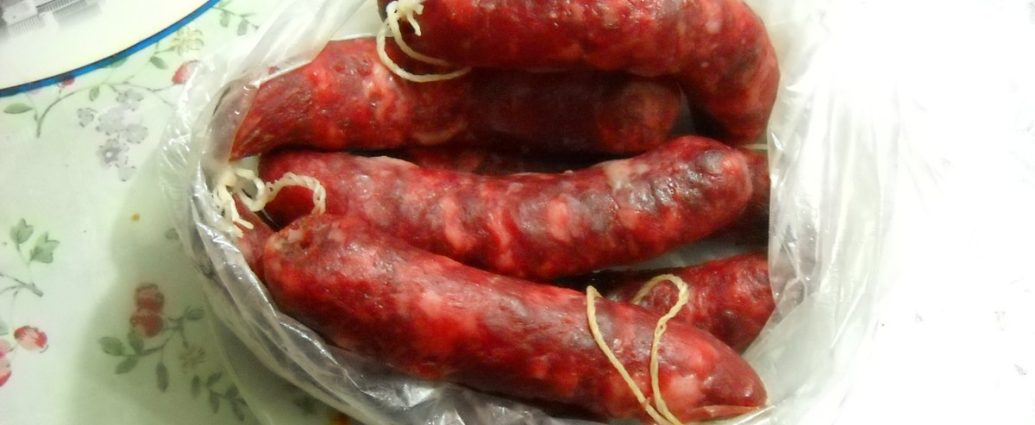
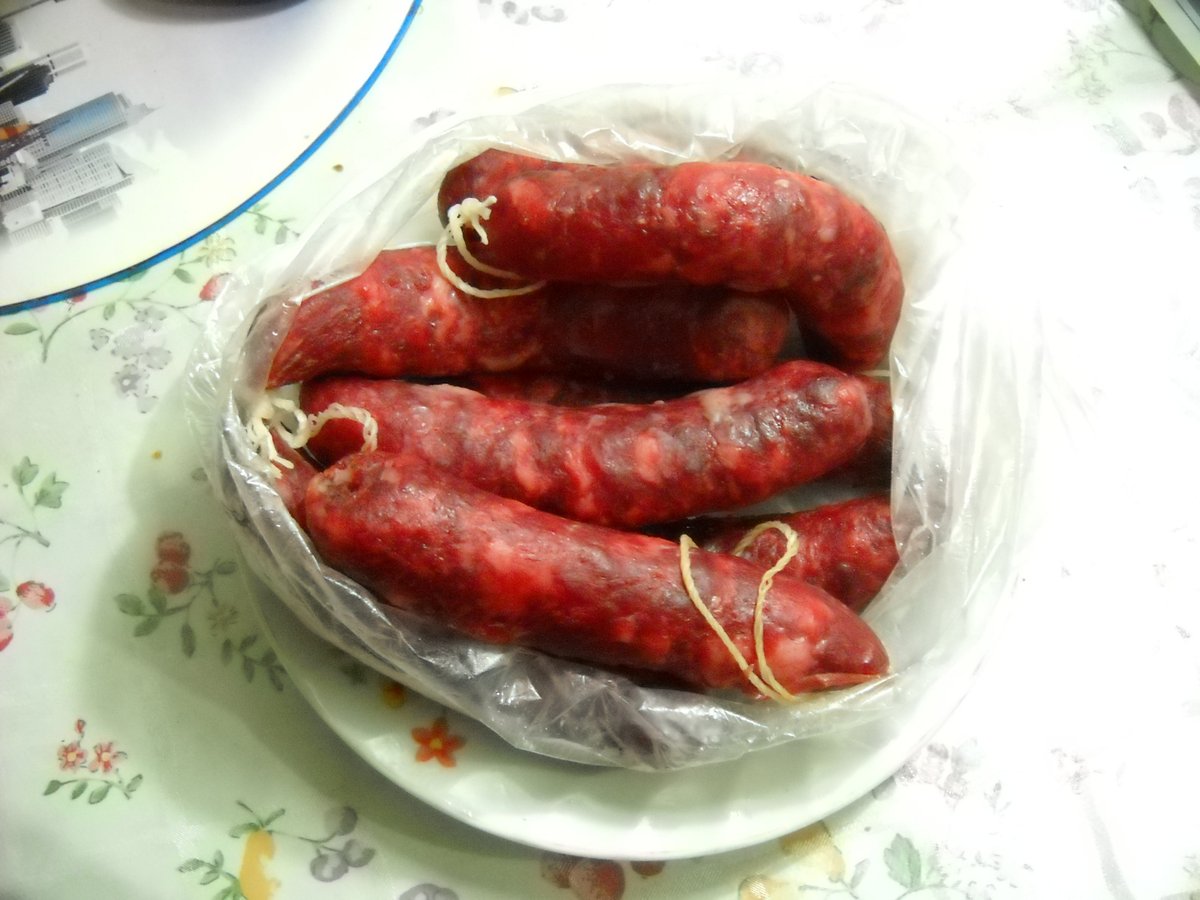
Steamed Cured Meats (腊味合蒸) is a classic Hunan dish that celebrates the art of Chinese curing — a medley of cured pork belly, Chinese sausage, and cured duck or pork liver, sliced and steamed together until the fats render and the flavors meld into a rich, savory symphony. It is rustic, intensely flavorful, and requires almost no active cooking.
腊味 (là wèi) refers to the family of cured meats that Chinese families have made every winter for centuries — pork belly, sausage, duck, and liver, salted, spiced, and air-dried in the cold, dry air of the twelfth lunar month (腊月, from which the name comes). Before refrigeration, curing was how families preserved a pig through the winter; today it is done for flavor. 腊味合蒸 — “steamed cured meats together” — is the dish that shows the tradition off at its purest. There is no sauce, no frying, no trick: the meats steam in their own rendered fat, and the only decision a cook makes is what to put underneath to catch the drippings.
This recipe comes from a village home in Hunan where the family cures their own meats every winter. The secret, I learned, is to steam the cured meats over a bed of dried bean curd skins or taro, which absorb the rendered fat and become as delicious as the meats themselves.
The Bed Is Half the Dish
This is the detail that turns a simple steam into a memorable meal. As the cured meats heat, their fat renders and drips downward — carrying salt, smoke, and the deep savoriness of the cure with it. Whatever sits beneath absorbs all of that. Traditional Hunan and Cantonese kitchens use dried bean curd skin (腐竹), taro, sliced daikon, or even plain steamed rice. The result is a two-layer dish: the intensely flavored meats on top, and beneath them a soft, rich, deeply seasoned base that many diners prefer to the meat itself. Never steam 腊味合蒸 in a deep bowl without a bed — you are pouring flavor down the drain.
The Meats
- 腊肉 (cured pork belly) — the anchor: smoky, salty, and rich with rendered fat
- 腊肠 (Chinese sausage / lap cheong) — sweet and dense, with a characteristic rose wine aroma
- 腊鸭 (cured duck) — gamey and intensely savory; a Hunan specialty
- 腊猪肝 (cured pork liver) — mineral and firm; a traditional addition in the north
- Slice everything to a similar thickness — about 5mm — so they cook evenly
- Rinse and blanch briefly if the cure is very salty or heavily smoked
Ingredients and Where to Find Them
- Cured pork belly (腊肉) — Chinese cured pork belly
- Chinese sausage (腊肠) — lap cheong
- Dried bean curd skin (腐竹) — dried bean curd sticks for the bed
Also needed: ginger, scallions, Shaoxing wine, a little sugar, and optionally dried chilies for heat. Some cooks add a spoonful of fermented black beans or a splash of soy for depth.
How to Make It
- Soak 60g dried bean curd sticks in warm water for 2 hours until pliable; drain and cut into 5cm lengths
- Rinse 200g cured pork belly and 3 links of lap cheong; blanch the pork belly 3 minutes if it is very salty, then slice both thinly
- Layer the bean curd sticks in a shallow heatproof dish; scatter with ginger slivers and a few dried chilies
- Arrange the sliced cured meats over the top in an overlapping, even layer
- Drizzle with 1 tablespoon Shaoxing wine and 1 teaspoon sugar; add a few scallion lengths
- Steam over rapidly boiling water for 40 minutes until the fats have fully rendered and the base is soaked through
- Serve hot with plenty of steamed rice — the juices are meant to be mixed in
Variations
- With taro — sliced taro as the bed turns the dish into something close to a casserole; very common in Cantonese cooking
- With daikon — sliced white radish lightens the dish and absorbs the fat beautifully
- With dried bamboo shoots — a Hunan specialty that adds an earthy, fibrous note
- Spicier version — add 6 snipped dried chilies and a teaspoon of doubanjiang to the base
Frequently Asked Questions
Do I need to soak or blanch the cured meats?
It depends on how salty and smoky they are. Shop-bought 腊肉 can be very salty — blanch it for 3 minutes and rinse before slicing. If you cured it yourself or bought a lightly cured version, a quick rinse is enough.
Can I add other cured meats?
Absolutely — cured duck, cured chicken, or cured pork liver are traditional additions. The more variety, the richer the flavor. Just ensure all meats are sliced to similar thickness for even cooking.
How long does it keep?
Three to four days refrigerated, and it reheats well by re-steaming for 10 minutes. Cured meats themselves keep for months in the refrigerator or freezer, so this is a dish you can make whenever the craving strikes.
Is this dish very salty?
It can be, because the flavor comes almost entirely from the cure. Balance it with plenty of plain rice, and add the sugar called for in the recipe — it rounds the saltiness without making the dish sweet. If you are watching sodium, blanch the meats first.
More Hunan Classics
Explore Hunan flavor with my Xiao Chao Rou 小炒肉, the fiery Yongzhou Blood Duck 永州血鸭, or the steamed Fish Head with Chopped Chili 剁椒鱼头.
As an Amazon Associate, I earn from qualifying purchases. These are affiliate links at no extra cost to you.
1 Comment