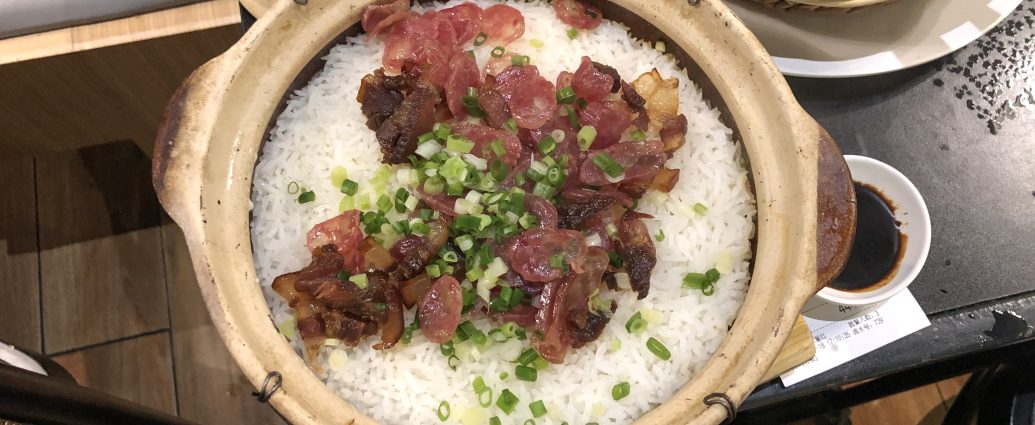
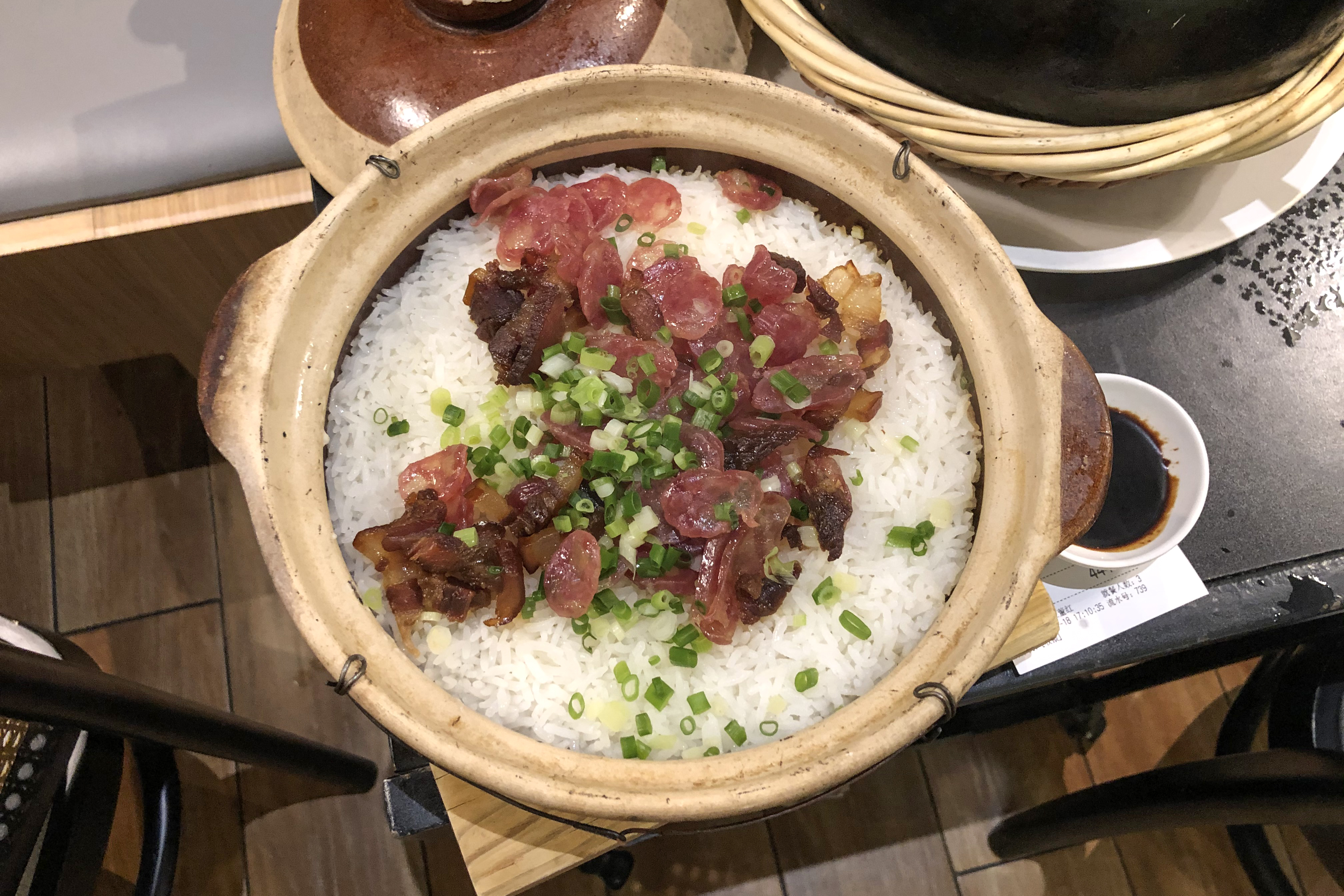
Claypot Rice (煲仔饭), specifically Cured Meat Claypot Rice, is one of Cantonese cuisine’s most soulful one-pot dishes — fluffy rice cooked in a clay pot with Chinese sausage, cured pork, and a perfectly crackly golden crust at the bottom. Every grain absorbs the sweet, savory drippings of the cured meats, while the crispy rice (guo ba) is the prize at the bottom. Here is the authentic method.
Claypot rice (煲仔饭) is a Cantonese one-pot dish of rice cooked in a clay pot with toppings like Chinese sausage, cured pork, or chicken. The rice is seasoned with soy sauce at the end, and the bottom forms a crispy golden crust called guo ba that is considered the best part.
煲仔饭 takes its name from the vessel — 煲仔 means “little pot” — and the vessel is not incidental. Unglazed clay heats slowly and retains heat, so the rice cooks gently from the bottom up while the meat steams on top. That combination produces two things at once: rice that has absorbed the rendered fat and juices of the toppings, and a thin, golden, crunchy layer where the rice meets the pot. In Cantonese food culture, 腊味煲仔饭 (with cured meats) is the classic winter version, and 腊味 — the cured sausages and pork made in the cold months — is exactly the right ingredient for a dish that is itself a cold-weather comfort.
This recipe comes from a claypot rice stall in Guangzhou, where the cook taught me the essential trick: control the heat in stages. High heat to boil, low heat to steam the meats into the rice, then a final burst of high heat to create the crispy bottom crust. Getting all three right is the difference between good and legendary.
Three Stages of Heat
- High heat to boil. Rice and water go into the pot over high heat until the water boils and is mostly absorbed. This stage is fast and needs attention — the water should not boil over.
- Low heat to steam. The toppings are laid on top, the lid goes on, and the heat drops to the lowest setting for 15–20 minutes. The rice steams, the cured meats render their fat downward, and everything cooks through. Do not lift the lid.
- High heat for the crust. For the final two minutes, the heat goes back up. A teaspoon of oil drizzled around the inside edge of the pot helps the rice crisp evenly, and you will hear a faint crackling — that is the 锅巴 forming.
The 锅巴 (Crispy Crust)
锅巴 — the golden crust at the bottom — is the reason people order claypot rice, and regulars at a 煲仔饭 shop will argue about who gets it. It forms when the rice at the very bottom is exposed to direct heat long enough to dry and toast, but not so long that it burns. Three things help: slightly less water than for plain rice (about 1:1.15 by volume), a drizzle of oil around the edge before the final burst, and listening. When the crackling sound becomes steady and the smell turns toasty, it is done.
- Soak the rice 30 minutes — it cooks more evenly and the crust forms more predictably
- Use a heavy clay pot — thin metal pots scorch the bottom before the rice is done
- Do not stir — stirring at any point prevents the crust from forming
- Rotate the pot — if your stove has a hot spot, turn the pot a quarter-turn every few minutes for even crusting
- Rest 5 minutes off the heat — the rice firms and the crust loosens from the pot
Ingredients and Where to Find Them
- Chinese sausage (腊肠) — lap cheong, sliced on the bias
- Cured pork belly (腊肉) — cured pork belly, sliced thin
- Seasoned soy sauce — sweetened soy sauce for finishing
Also needed: jasmine or short-grain rice, ginger, scallions, light and dark soy sauce, sugar, sesame oil, and a leafy green such as bok choy or gai lan.
How to Make It
- Rinse and soak 300g (1.5 cups) rice for 30 minutes; drain and place in a clay pot with 350ml water
- Bring to a boil over high heat, uncovered, until the water level drops below the rice
- Arrange 3 sliced lap cheong and 150g sliced cured pork belly over the rice, add ginger slivers, and cover
- Reduce the heat to the lowest setting and cook 15–20 minutes without lifting the lid
- Drizzle 1 teaspoon oil around the inside edge, raise the heat to high for 2 minutes until you hear steady crackling, then remove from the heat and rest 5 minutes
- Mix 2 tablespoons light soy, 1 teaspoon dark soy, 1 teaspoon sugar, and 1 teaspoon sesame oil; pour over the rice
- Toss gently at the table, scatter with scallions, and serve with blanched greens — and scrape up the 锅巴
Variations
- With chicken (滑鸡煲仔饭) — marinated chicken thigh with ginger and Shaoxing wine; a year-round favorite
- With minced beef and egg — beef mixed with oyster sauce, cracked egg on top at the end
- With salted fish — 咸鱼煲仔饭 uses salted fish with pork; intensely savory
- With mushrooms — a vegetarian version using shiitake and a soy-based seasoning sauce
Frequently Asked Questions
How do I get the crispy bottom crust every time?
Use slightly less water (1:1.15 ratio), don’t lift the lid during the low-heat stage, and give it the final high-heat burst. Drizzling a teaspoon of oil around the edge before the final stage helps crisp it evenly.
Can I make claypot rice without a clay pot?
Yes — a heavy cast-iron or enameled pot works reasonably well, though the crust forms more slowly and can scorch. Avoid thin stainless steel, which develops hot spots that burn the rice before the rest is cooked.
What if my rice is undercooked?
Add 2 tablespoons of hot water around the edge, cover, and steam on the lowest heat for another 5 minutes. Opening the lid during cooking releases the steam that is doing the work, which is the most common cause of undercooked rice.
Why is my rice mushy?
Too much water, or the rice was not soaked. Use a 1:1.15 rice-to-water ratio by volume, soak the rice for 30 minutes first, and do not stir during cooking — stirring releases starch and turns the rice gluey.
More Cantonese Classics
Explore more Cantonese favorites: my Honey Char Siu 蜜汁叉烧, the crisp Siu Yuk 脆皮烧肉, or the lacquered Roast Duck 烧鸭.
As an Amazon Associate, I earn from qualifying purchases. These are affiliate links at no extra cost to you.