
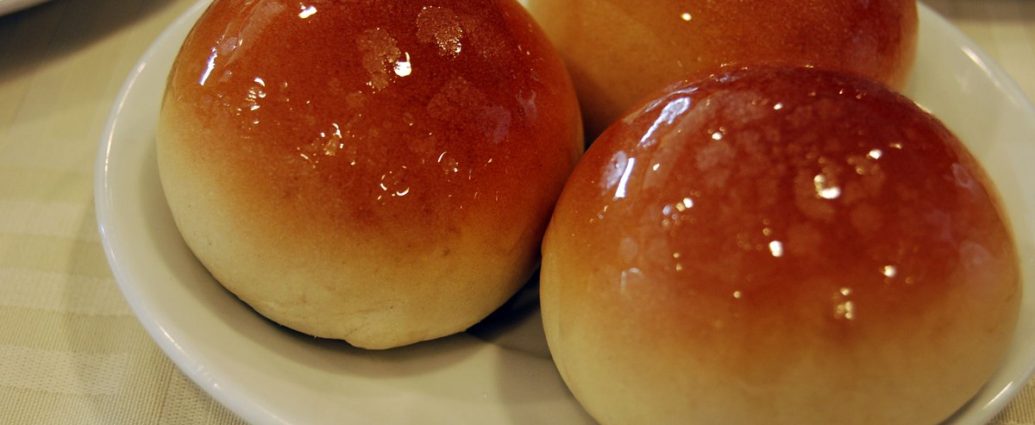
Char Siu Bao (叉烧包) is one of the most beloved dim sum classics — impossibly fluffy, cloud-like steamed buns cradling a savory-sweet filling of barbecued pork in a glossy, sticky sauce. The buns crack open naturally during steaming, revealing the rich red filling within like a floral blossom.
叉烧包 is one of the four 天王 (“heavenly kings”) of Cantonese dim sum, alongside har gow, siu mai, and chicken feet — the four dishes that define a proper tea-house table. Its signature is the 爆口 (bào kǒu, “burst mouth”): the top of the bun splits open during steaming to reveal the filling, a deliberate effect achieved through shaping and dough tension. Cantonese dim sum culture distinguishes two styles — 高身 (tall, split open at the top) and 低身 (flatter, with the split around the sides) — and regulars at a tea house will have opinions about which a restaurant serves.
This recipe comes from a dim sum chef in Guangzhou who taught me that the key to perfectly fluffy bao is in the dough fermentation — a combination of yeast, baking powder, and a touch of lard that creates the signature cotton-soft texture.
Two Leaveners, Not One
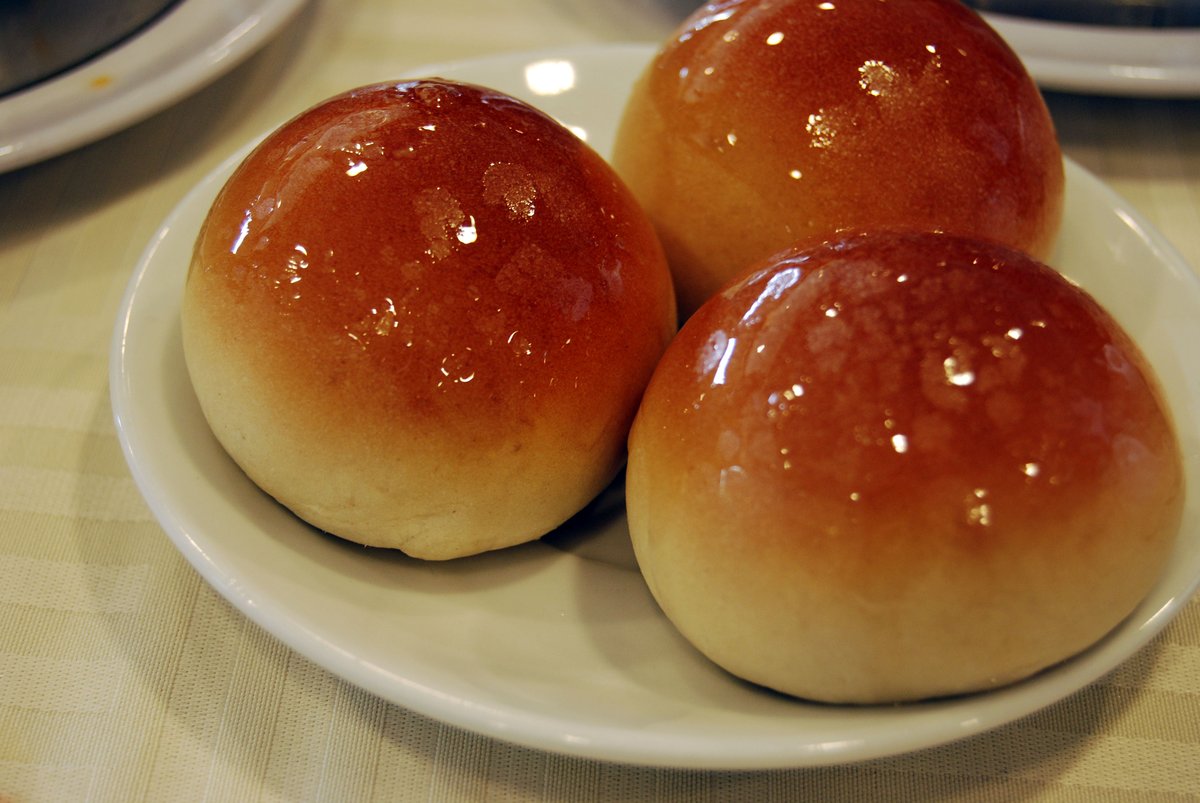
Most bread relies on yeast alone. Cantonese bao dough uses yeast and baking powder, and the combination is what produces the cloud texture. The yeast ferments the dough for depth and structure during the rise; the baking powder provides a fast, chemical lift when the bun hits the steam, puffing the crumb and keeping it tender. That is why bao stay soft even after they cool — a yeast-only bun turns dense and chewy within an hour. The third ingredient is lard (or a neutral shortening), which coats the gluten and gives the crumb its fine, melting softness.
Shaping for the 爆口 Split
- Roll the edges thin and the center thick — a thick center lifts the filling and creates the pressure point where the bun splits
- Pleat tightly and seal well — a loose seal means the bun opens at the bottom instead of the top
- Do not over-proof — over-proofed dough collapses in the steamer and the split will not form cleanly
- Steam over high heat with a wrapped lid — condensation dripping on the buns leaves pockmarks and prevents a clean split
- Rest 3 minutes before opening the lid — sudden temperature change deflates the buns
Ingredients and Where to Find Them
- Char siu (BBQ pork) — char siu sauce for the filling; homemade pork is best
- Low-protein flour — low-protein bao flour for the softest crumb
- Oyster sauce — oyster sauce for the savory-sweet filling sauce
Also needed: yeast, baking powder, sugar, lard or shortening, milk or water, cornstarch, light and dark soy sauce, honey, garlic, and scallions. A little red coloring in the filling is traditional for the shop-window look but entirely optional.
How to Make Them
- Filling: stir-fry 300g (10.5 oz) diced char siu with 2 minced garlic cloves, then add 200ml water with 2 tablespoons oyster sauce, 1 tablespoon light soy, 1 tablespoon dark soy, 2 tablespoons sugar, and 1 tablespoon honey
- Simmer 5 minutes, thicken with a cornstarch slurry to a thick, glossy consistency, and cool completely (chill if possible)
- Dough: mix 400g (3.3 cups) flour, 1 tablespoon yeast, 1 tablespoon baking powder, 60g sugar, and 1/2 teaspoon salt; add 220ml warm milk and 30g lard; knead 10 minutes until smooth
- Rise 1 hour until doubled; punch down and divide into 12 pieces
- Flatten each piece with a thick center and thin edges; place a heaped tablespoon of chilled filling in the center
- Pleat and seal tightly, then rest 20 minutes
- Steam over high heat for 12 minutes with a towel-wrapped lid; rest 3 minutes before opening
Variations
- Baked char siu bao — brush with egg wash and bake at 190°C (375°F) for 18 minutes for the golden, slightly crusty bakery version
- With homemade char siu — see my Honey Char Siu 蜜汁叉烧
- With chicken — diced chicken thigh in the same sauce makes a lighter filling (鸡包仔)
- With salted egg yolk — a quarter yolk added to the filling gives a richer, more luxurious bun
Frequently Asked Questions
Why did my bao not split open on top?
The seal was too loose, the dough was over-proofed, or the center was not thick enough. Seal the pleats firmly, avoid over-proofing, and leave a thicker layer of dough at the center so the filling pushes upward as it steams.
Why are my bao dense instead of fluffy?
The dough needs both yeast and baking powder, and it needs to be kneaded until smooth. Under-kneading leaves a coarse crumb, and skipping the baking powder means the buns will not puff in the steamer. Lard or shortening also matters — it keeps the crumb tender.
Can I freeze them?
Yes — freeze assembled uncooked buns on a tray, then bag them. Steam from frozen for 15 minutes. Cooked buns also freeze well and re-steam in 8 minutes.
What is the difference between char siu bao and man tou?
Char siu bao is a filled bun with BBQ pork. Man tou is a plain steamed bun with no filling. Both use a similar dough, but char siu bao dough is slightly sweeter and softer.
More Dim Sum Classics
Build a dim sum table with my Custard Buns 奶黄包, the molten Salted Egg Yolk Custard Buns 流沙包, or the crisp Potstickers 锅贴.
As an Amazon Associate, I earn from qualifying purchases. These are affiliate links at no extra cost to you.
2 Comments