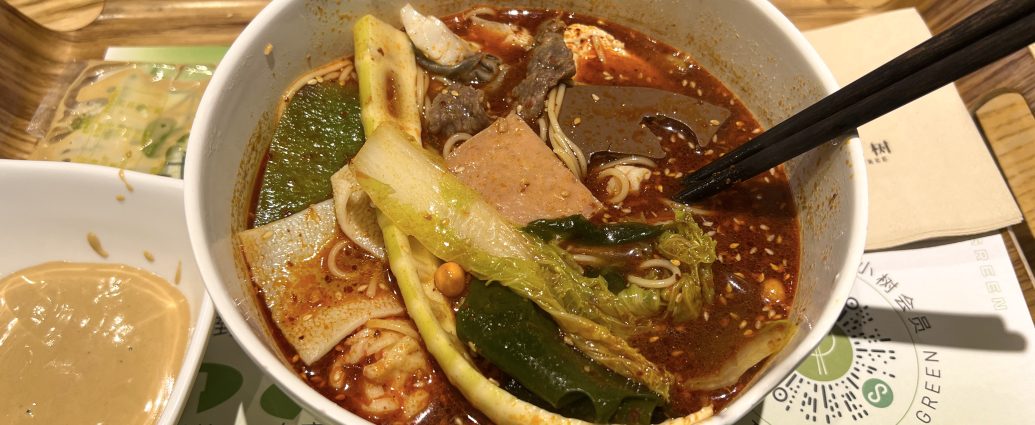
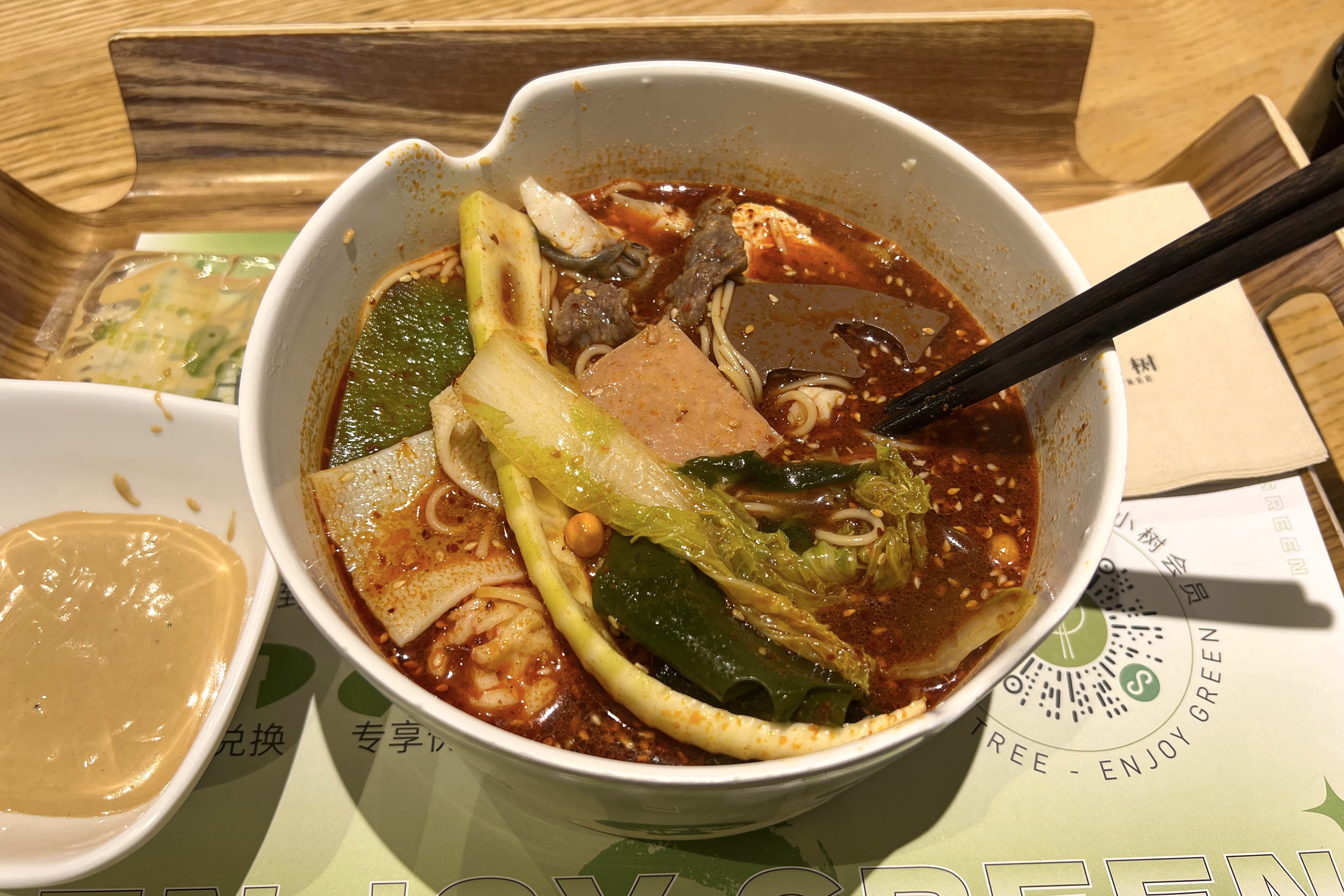
Mala Tang (麻辣烫) is the ultimate Chinese street food — a personal bowl of noodles, vegetables, and your choice of proteins, all cooked in a bubbling, numbing-spicy broth. Unlike hotpot’s shared pot, mala tang is a one-person feast: pick your ingredients, hand them to the vendor, and minutes later get back a steaming bowl of mala heaven. Here is how to make it at home.
Mala tang (麻辣烫) is a Chinese street food of noodles, vegetables, and proteins cooked in a spicy, numbing broth flavored with chili oil, Sichuan peppercorns, and doubanjiang. It is a personal one-bowl meal, like hotpot for one.
麻辣烫 began in the Sichuan town of Leshan in the 1980s as a cheap dockside meal — vendors simmered skewers in a shared spicy broth, and customers paid by the stick. Its transformation into one of China’s most ubiquitous street foods came from a simple innovation: letting each customer build their own bowl from a wall of ingredients, then cooking it to order. That is still the appeal today. A mala tang shop is a self-service buffet of textures, and the broth is the only fixed element — which is exactly why the broth has to be good.
This recipe comes from a street vendor in Chengdu who taught me the essential trick: the broth is built on a base of doubanjiang fried in oil until it turns deep red, then finished with chili flakes and Sichuan peppercorns. That red oil IS the flavor — everything else is just cooked in it.
The Red Oil Is the Recipe
Everything in mala tang depends on the base: doubanjiang fried in oil until it darkens and separates, then bloomed with chili flakes and ground Sichuan peppercorns. That process — called 炒底料 (frying the base) — is what turns ordinary oil into the deep-red, fragrant medium that carries the numbing heat into every ingredient. Skimp on it and you get a bowl of mildly spicy soup; do it properly and you get the real thing. The base keeps for a week in the fridge, so it is worth making a double batch and having mala tang on demand.
Building Your Bowl
This is where mala tang becomes personal. Choose two or three from each category:
- Noodles: sweet potato vermicelli, instant ramen, wide rice noodles, or 土豆粉 (potato starch noodles)
- Vegetables: napa cabbage, lotus root, potato slices, wood ear, enoki mushrooms, tofu skin, bok choy
- Proteins: thin beef slices, luncheon meat, fish balls, shrimp, quail eggs, fried tofu puffs
- Finishing: crushed peanuts, cilantro, scallions, sesame paste, extra chili oil, vinegar
The classic order of cooking matters: dense items first, leafy greens last, noodles at the very end so they do not overcook.
Ingredients and Where to Find Them
- Pixian doubanjiang — doubanjiang is the foundation of the red-oil base
- Sichuan peppercorns — whole Sichuan peppercorns, ground fresh for the numbing finish
- Chili flakes — coarse chili flakes bloom in the hot oil to build the red color
Also needed: garlic, ginger, star anise, bay leaves, rock sugar, chicken stock, light soy sauce, and Shaoxing wine. Sesame paste and Chinkiang vinegar are the traditional table condiments.
How to Make It
- Heat 150ml oil over low heat with 4 slices ginger, 6 garlic cloves, 2 star anise, and 2 bay leaves; infuse 10 minutes, then strain out the aromatics
- Add 3 tablespoons doubanjiang and fry gently 5 minutes until the oil turns deep red and smells fragrant
- Add 2 tablespoons chili flakes and 1 tablespoon ground Sichuan peppercorn; stir 30 seconds and remove from heat — this is your 底料
- For each serving, combine 2 tablespoons of the base with 400ml chicken stock, 1 teaspoon light soy, and a pinch of rock sugar; simmer 5 minutes
- Cook the dense ingredients (lotus root, potato, mushrooms) for 5 minutes, then add proteins for 2–3 minutes
- Add leafy greens and noodles last, cooking 1–2 minutes until just done
- Transfer to a bowl, top with crushed peanuts, cilantro, scallions, and a spoonful of sesame paste; adjust with vinegar and extra chili oil
Variations
- Milder version — halve the chili flakes and peppercorn, and add an extra teaspoon of sugar and a splash of milk for a creamy, tamed broth
- With bone broth — simmer pork bones for 2 hours and use that instead of chicken stock for a richer, more traditional base
- Vegetarian version — use mushroom-kombu stock; the red-oil base is already plant-based
- Dry version (麻辣拌) — cook the ingredients, drain them, and toss with the base instead of broth; popular in northeastern China
Frequently Asked Questions
What is the difference between mala tang and hotpot?
Mala tang is a single-serving street food: you choose ingredients, the vendor cooks them in a spicy broth, and you eat from one bowl. Hotpot is a shared, interactive meal where diners cook raw ingredients themselves at the table. Mala tang is faster, cheaper, and personal — hotpot is social and slow.
Is mala tang very spicy?
It is meant to be both spicy (辣) and numbing (麻), but the level is entirely up to you. Because the base is added per bowl, you can start with a tablespoon and build up. Add sugar or a splash of milk to soften the heat, or sesame paste to coat and mellow it.
Can I make the broth ahead?
Yes — the red-oil base keeps 1 week refrigerated. Just reheat with stock and add your ingredients when ready.
What noodles are traditional?
Sweet potato vermicelli and 土豆粉 (potato starch noodles) are the most traditional because their chewy texture holds up in hot broth. Instant ramen is the most common everyday choice, and wide rice noodles work well too.
More Sichuan Street Favorites
Love the mala style? Try my Mala Xiang Guo 麻辣香锅, the fiery Mao Xue Wang 毛血旺, or the nine-grid Chongqing Hotpot 重庆火锅.
As an Amazon Associate, I earn from qualifying purchases. These are affiliate links at no extra cost to you.